


Let’s get straight to the point and answer the biggest question on your mind: Yes, you can absolutely get married virtually, and it’s 100% legally binding.
This isn’t some temporary pandemic fix or a legal gray area. It’s a formal, government-sanctioned process offered by specific US jurisdictions, like Utah, that empowers couples anywhere on the globe to legally wed over a simple video call. This guide provides actionable steps and clear insights to help you navigate the process from start to finish.
Your Guide to a Legally Binding Virtual Marriage
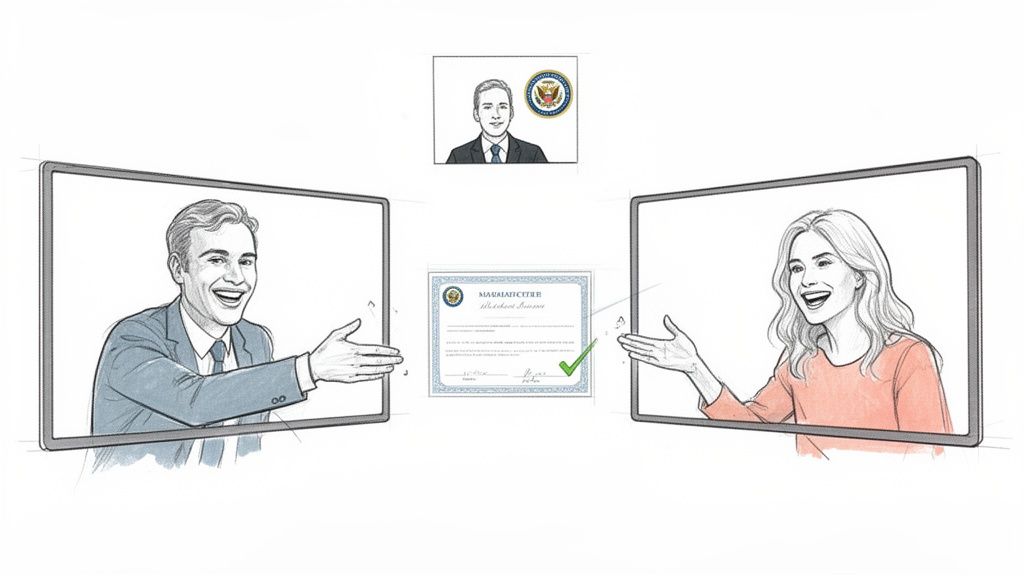
So, how does this actually work? Think of it as a modern-day courthouse wedding. The entire process—from applying for your license to saying “I do”—happens online, but it follows all the official rules to the letter.
You’ll still need valid identification, an official marriage license, and a licensed officiant to preside over the ceremony. The only real difference? Geography is no longer a barrier.
This modern approach has been a game-changer for countless couples wrestling with logistics. Whether you’re in a long-distance relationship, dealing with a military deployment, or trying to navigate complex international borders, an online wedding cuts through the traditional obstacles of travel and red tape. It’s a direct and legitimate path to making your union official.
Who Is a Virtual Wedding For?
A virtual marriage provides a practical, official, and accessible path to marriage. It’s a powerful solution if you need to formalize your union without the stress of travel and complex logistics.
You might find it’s the perfect fit if you are:
- An international couple: A virtual wedding bypasses the complicated visa requirements and travel costs often required just to get legally married.
- A military couple: When one or both partners are deployed, an online wedding offers the flexibility to get married on a timeline that works for you, regardless of location.
- A long-distance couple: You no longer have to wait until you can be in the same city to make your marriage legal. You can secure your future together now.
Getting married online isn’t a “lesser” version of a wedding. It’s an actionable tool that prioritizes your legal union, allowing you to move forward with immigration, residency, or other life plans.
Here’s a quick breakdown of what the process involves:
Virtual Marriage at a Glance
| Component | What It Means for You |
|---|---|
| Legal Jurisdiction | Your marriage is processed through a U.S. county (like in Utah) that has authorized online weddings. |
| Marriage License | You apply for and receive a 100% valid U.S. marriage license completely online. No travel needed. |
| Virtual Ceremony | A licensed officiant conducts your ceremony over a video call (like Zoom or Skype). |
| Legal Recognition | You receive a U.S. marriage certificate, legally recognized across the United States and internationally. |
This streamlined approach ensures your marriage is official without the logistical nightmares.
The entire process is built on a solid legal foundation. A marriage certificate issued through a jurisdiction like Utah is a valid U.S. legal document, recognized both at home and abroad. If you need it for official purposes in another country, like for immigration, an extra certification called an Apostille is typically all that’s needed to validate it.
Curious about the nitty-gritty legal details? You can learn more about the legality of online marriage in our detailed guide. We designed this process to be straightforward, secure, and—above all—legally sound.
Why Online Weddings Are More Than Just a Trend
The idea of getting married online might feel new, but its explosion in popularity is a real sign of how we’re starting to think differently about marriage. What began as a practical fix for many during a global crisis has now become a smart, intentional choice for couples all over the world. The reasons why are straightforward, powerful, and perfectly suited for modern life.
For most couples, it boils down to three things: convenience, cost, and closing the distance. Traditional weddings are beautiful, no doubt, but they often come with a mountain of planning and logistical headaches. A virtual wedding slices right through all that, offering a clear path to getting legally married without all the stress.
The Modern Couple’s Dilemma
Think about a couple like Anna and Ben. She’s a graphic designer in Lisbon, and he’s a software engineer in Toronto. They were completely ready to get married but found themselves stuck in a classic bind.
Flying to one person’s country meant wrestling with complex visa paperwork. A destination wedding meant huge costs and the nightmare of coordinating travel for family spread across different continents. They were at a standstill, their future together paused by borders and bureaucracy.
This is an incredibly common story for international and long-distance couples. The deep desire to be legally united often crashes against the hard realities of immigration rules, travel costs, and months of planning.
An online wedding gave them a way forward. They were able to legally formalize their commitment right from their own homes, receiving a valid U.S. marriage certificate that made their future immigration plans much simpler. Their story proves a powerful point: love shouldn’t get stuck in logistical limbo.
More Than Convenience—It’s a Smart Financial Choice
Beyond bridging geographical gaps, the financial case for a virtual wedding is rock-solid. The average cost of a traditional wedding keeps climbing, often soaring into the tens of thousands of dollars. That kind of financial strain can easily overshadow what’s supposed to be a happy time.
In stark contrast, an online ceremony simply erases many of the biggest wedding expenses:
- Venue Costs: No need to shell out for an expensive location.
- Travel and Accommodation: You, your partner, and your guests save thousands on flights and hotels.
- Vendor Fees: While you can still hire a photographer or planner if you want, most of the traditional vendor costs just disappear.
Getting married virtually means couples can put their money toward what truly matters to them—whether that’s a down payment on a house, a honeymoon fund, or just starting their new life without a pile of debt. This isn’t just a fleeting trend; it’s part of a global shift toward weddings that are more accessible, personal, and practical.
The numbers back this up. The global internet wedding market is on track to hit a massive $231,324.48 million by 2033, growing at a strong 12.7% each year from 2025. This growth is being driven by couples who want digital solutions that fit their lives, especially when old-school wedding planning feels more and more out of touch. You can dive deeper into the growing internet wedding market on datainsightsmarket.com.
How a Virtual Marriage Is Legally Recognized Worldwide
It’s the biggest question we get, and it’s a fair one: if we get married online, is it actually a real, legal marriage? The answer is a simple, resounding yes. How it all works is much less complicated than you’d think, and it all comes down to a legal idea called jurisdictional authority.
Think about it like getting a driver’s license. A license issued in California is valid in all 50 states because California has the legal authority to issue it. A marriage certificate is no different. When you tie the knot with us, you aren’t just having a symbolic ceremony on Zoom. You are legally getting married within a specific U.S. jurisdiction—like Utah County—that has fully authorized online marriage ceremonies.
This U.S. county essentially becomes your “digital courthouse.” It doesn’t matter if you’re in London and your partner is in Tokyo. For the legal purposes of your application and ceremony, you are operating under the full authority of that U.S. jurisdiction.
From a Digital Courthouse to Global Recognition
After you’ve said your vows, you’ll receive an official U.S. marriage certificate issued by that county. This is a critical point: it’s not some special “online” version of a certificate. It is the exact same legal document a couple would get if they walked into that courthouse and got married in person.
Your marriage is now legally recorded and recognized throughout the United States. This isn’t some clever loophole or a temporary fix from the pandemic. It’s a permanent, government-approved process built for the way we live today.
So, it’s valid in the U.S., but what about your home country? That’s where the next legal layer comes in, and it’s designed to make international recognition seamless.
An international treaty called the Hague Convention of 1961 created a simple, standardized way to authenticate legal documents for use in other countries. The official certification used in this process is known as an Apostille.
The Apostille: Your Golden Ticket to International Validity
An Apostille is basically an official seal of approval that authenticates your U.S. marriage certificate for use abroad. It confirms that all the signatures, seals, and stamps on your document are legitimate and were issued by a proper authority.
Once your marriage certificate has been “apostilled,” it becomes legally recognized by the 126 countries that have signed the Hague Convention. This includes most of the world—the UK, all of the EU, Australia, Japan, Mexico, and many more.
Here’s a quick rundown of how the legal chain of recognition works:
- Jurisdictional Authority: Your marriage is legally performed and recorded in a U.S. county that allows online weddings.
- Official U.S. Document: You receive a valid U.S. marriage certificate, which is recognized across the entire country.
- International Authentication: An Apostille is attached to your certificate, verifying it for international use.
- Global Acceptance: Your apostilled marriage certificate is now legally recognized in other member countries for all official matters, like immigration, name changes, or residency applications.
This established legal framework ensures your virtual marriage is more than just a romantic ceremony—it’s a rock-solid, legally binding union that’s recognized worldwide. And while Utah was a trailblazer, you can check out other US states that allow online marriage to see how this modern approach is growing. You can move forward with complete confidence, knowing your marriage will stand up to legal scrutiny wherever life takes you.
Your Step-by-Step Guide to Getting Married Online
So, you’ve decided a virtual marriage is the right move. Fantastic! The process is far more straightforward than most people think, designed to be simple and clear no matter where you are in the world.
Let’s walk through the entire journey, from your first click to holding your official marriage certificate in your hands. Consider this your roadmap.
Step 1: Verify Your Eligibility and Choose a Service
First, ensure you meet the basic legal requirements. The criteria are simple and inclusive, making this process accessible to couples worldwide.
- Age Requirement: Both partners must be at least 18 years old.
- Marital Status: Neither partner can be currently married to someone else.
- Consent: Both partners must be of sound mind and willingly consent to the marriage.
That’s it. There are no residency or citizenship requirements. Once you confirm your eligibility, the next step is to choose a trusted service like MarryFromHome.com that specializes in legal online marriages. An experienced service will handle the administrative work for you, from filing the license to ordering the Apostille, ensuring a smooth and legally compliant process.
Step 2: Prepare Your Documents
This step is about gathering your paperwork. The requirements are minimal, but accuracy is essential to avoid delays.
Actionable Tip: Before you start the application, take clear digital photos or scans of your government-issued photo IDs. Double-check that the names on your IDs match the names you will use on the application form exactly. Even a small discrepancy, like a missing middle initial, can cause issues.
You will each need one valid, unexpired, government-issued photo ID. Acceptable forms include:
- A passport from any country
- A driver’s license or state ID card
- A national identity card
Having these files ready to upload will make the application process much faster.
Step 3: Complete the Online Application
With your documents ready, you can now fill out the online marriage license application. This is the official start of your legal journey. The form will require basic information for both partners, such as full legal names, dates of birth, and current addresses.
Reputable services use secure online platforms, allowing you to submit your information and upload your IDs with confidence. This fully digital process is a significant advantage over traditional methods. As of 2026, only about 10 US states offer a truly end-to-end digital marriage process. Pioneers like Utah County have embraced technology, making it possible for couples worldwide to get married without navigating outdated, paper-based systems. You can learn more about the trends shaping the internet wedding market on datainsightsmarket.com.
Step 4: The Virtual Ceremony Itself
This is the moment you’ve been waiting for. After your application is approved and the license is issued, you’ll schedule your virtual ceremony. The ceremony takes place on a video platform like Zoom and is conducted by a legally recognized officiant.
You can invite friends and family from anywhere in the world by simply sharing the meeting link. The ceremony itself is efficient, typically lasting 5-15 minutes. The officiant will guide you through the legal declarations and vows, and then officially pronounce you married.
Step 5: Receive and Authenticate Your Certificate
Congratulations, you’re married! The final step is receiving your official documents. You’ll typically get a digital copy of your marriage certificate within a few hours, followed by the physical, certified hard copy in the mail.
For international couples, this is when the Apostille process happens. The Apostille is a separate certification that authenticates your U.S. marriage certificate for use in other countries. It is essential for ensuring your marriage is recognized for immigration, residency, or any other official purpose abroad. A full-service provider will handle ordering the Apostille for you.
The flowchart below breaks down how these final pieces—the ceremony, the certificate, and the apostille—come together to create your legally recognized union.
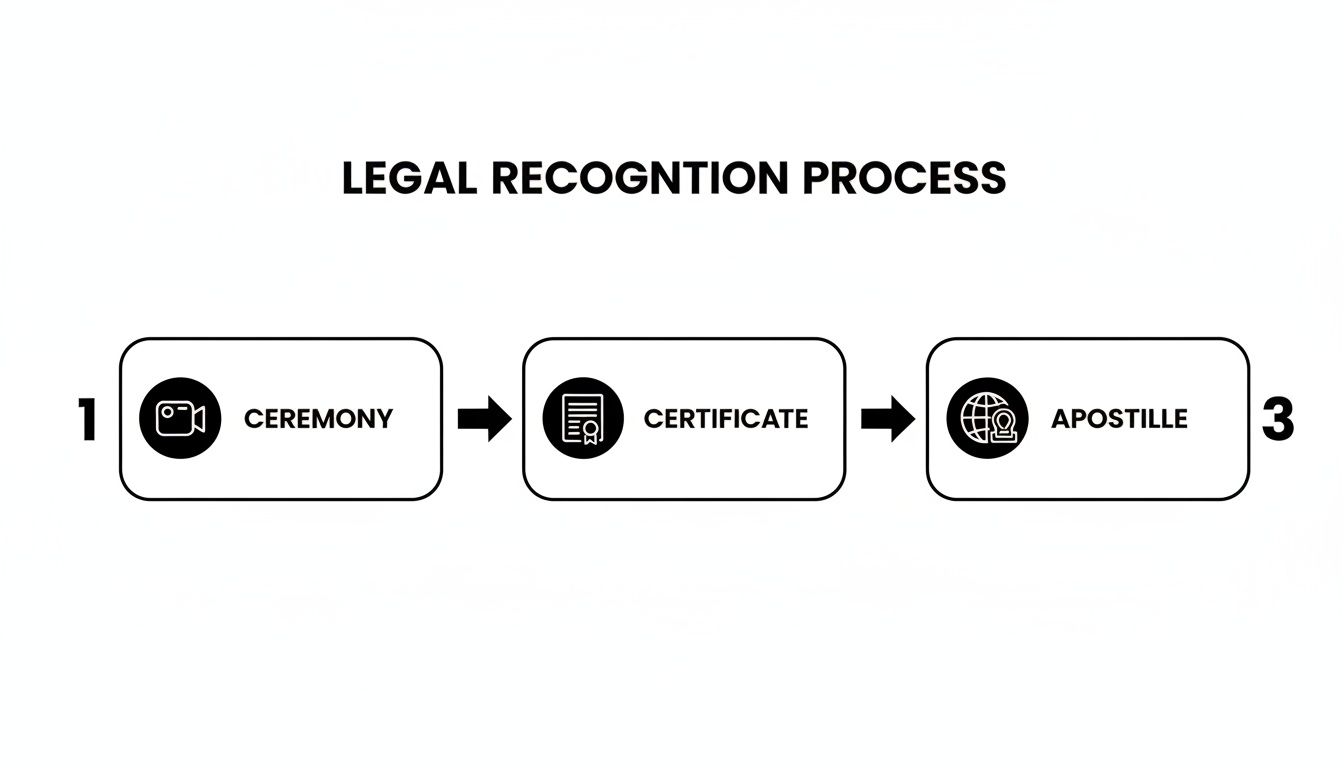
This visual shows just how clear the path is: from a legally performed ceremony to a globally recognized document.
How Technology Is Reshaping Weddings
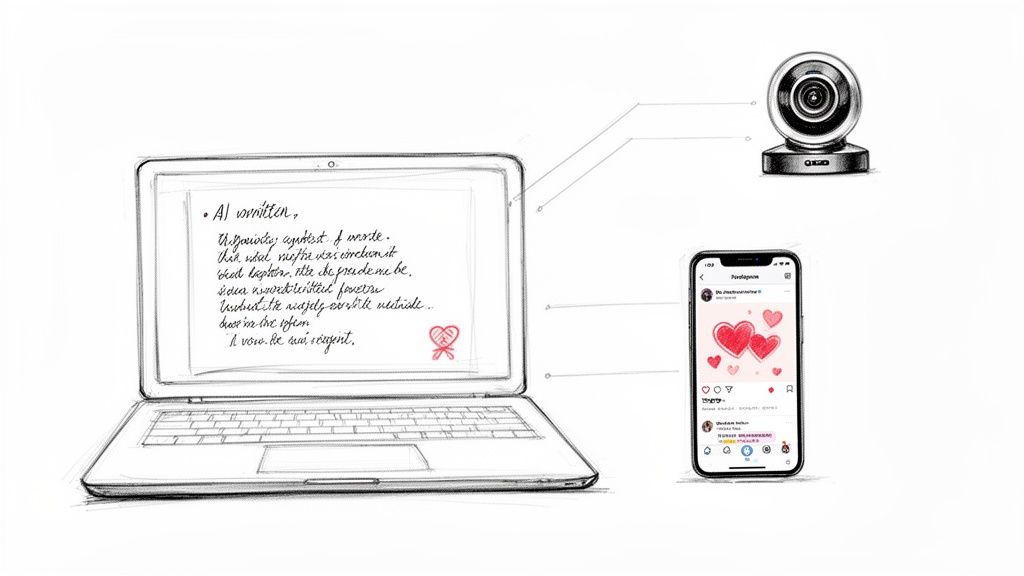
The idea of getting married online didn’t just appear out of nowhere. It’s the natural next step in a story that’s been unfolding for years. Couples today are already weaving technology into every part of their wedding, from dreaming up ideas to sending out the last thank-you card.
Think about it. Planning a wedding has totally changed. Instead of flipping through bridal magazines, couples are scrolling TikTok for venue tours, building vision boards on Pinterest, and managing their entire guest list with slick online tools. Tech isn’t just a fun extra anymore; it’s a core part of the planning process.
This shift tells us a lot about what modern couples want: things that are efficient, easy for everyone to access, and deeply personal. When you’re already using digital platforms for all the heavy lifting, choosing to make your legal ceremony online feels less like a wild idea and more like a smart, practical choice.
The New Digital Toolkit for Couples
The wedding planner’s toolbox looks a lot different than it did a decade ago. It’s now packed with apps, platforms, and even AI designed to make planning smoother and more creative. This is just how weddings are done now.
A recent report from Zola paints a pretty clear picture. A whopping 54% of couples are now using AI for wedding tasks—a figure that has shot up by nearly 200% in just two years. When it comes to finding inspiration, 50% of couples look to apps, and for Gen Z, that number jumps to 60% turning to TikTok. You can see all the details in the Zola First Look Report 2026.
These numbers aren’t just stats; they show a real trend. Couples are comfortable trusting technology with major parts of their big day. They’re using it to solve problems and bring their unique vision to life.
This widespread use of tech in wedding planning makes the idea of a virtual marriage feel completely normal. If you can trust AI with your seating chart and TikTok with your decor, why wouldn’t you trust a secure, government-approved platform for the legal ceremony itself?
From Planning to “I Do” Online
Technology’s role doesn’t stop once the planning is done. Live-streaming the ceremony for guests who can’t travel has become standard practice. A fully online ceremony is really just a small step from what many couples are already doing.
Couples are also using tech for some of the most personal parts of their wedding:
- Writing Vows: AI assistants are helping couples find the perfect words to say what’s in their hearts.
- Digital Invitations: Online RSVPs and custom wedding websites keep everyone in the loop instantly.
- Sharing Memories: Custom hashtags and shared photo albums create a living digital scrapbook of the celebration.
When you see how deeply these tools are already part of the wedding experience, getting married online stops feeling like a quirky “alternative.” It starts to feel like the most modern, fitting choice for today’s world. It just makes sense for how we build relationships and celebrate love now—with connection, and a little help from technology.
To get a better idea of how it all works, take a look at our guide on how to plan and host a Zoom wedding.
Answering Your Questions About Virtual Marriages
Even after seeing how simple the process is, it’s completely normal to have a few more questions pop into your head. Deciding to get married virtually isn’t just about planning a ceremony; it’s a huge legal step. To help you move forward with total confidence, we’ve put together answers to the most common questions we hear from couples just like you.
Our goal here is to tackle your concerns head-on, making sure you feel completely ready for this exciting new chapter.
Is a Virtual Marriage Legally Recognized in My Country?
This is the big one, the number one question on everyone’s mind. The answer is overwhelmingly yes. A marriage that’s legally performed and certified in one place, like Utah in the U.S., is recognized internationally thanks to long-standing legal agreements between countries. This holds true as long as the marriage doesn’t clash with the fundamental public policies of your home country (like laws about minimum age or consent).
But here’s the key part: to make that recognition official for practical things like immigration, residency, or changing your name, you’ll almost certainly need an Apostille. Think of an Apostille as an international notary stamp. It’s a standardized certification that tells foreign governments your U.S. marriage certificate is authentic and legitimate.
A good online marriage service won’t just tell you about this—they’ll guide you through getting one. This is the crucial step that turns your U.S. legal document into a globally accepted one, ensuring your marriage is honored wherever life takes you.
The move toward digital solutions isn’t just about convenience; it’s a direct response to real-world costs. The average traditional wedding now costs a staggering $36,000—a 9% jump from 2023. Virtual marriage offers a financially smart, legally sound path that sidesteps these massive expenses and geographical hurdles.
What Documents Do We Need to Marry Virtually?
You’ll be happy to hear that the required paperwork is refreshingly simple, and pretty much the same as what you’d need for an in-person civil ceremony. No complicated forms or trips to an office are necessary.
Here’s a quick checklist of what each partner usually needs:
- A Valid Government-Issued Photo ID: This is the most important piece. It can be a passport from any country, a driver’s license, or a national ID card. The only rule is that it cannot be expired.
- Basic Personal Information: You’ll need to provide your full legal names, dates of birth, and current addresses for the official marriage license application.
And that’s it. Seriously. No blood tests, no residency requirements, and you don’t need to be a U.S. citizen. The entire process was designed from the ground up to be accessible for international couples. Any quality service will give you a clear, easy-to-follow list, making the prep work completely stress-free.
How Does the Ceremony Actually Work?
The virtual ceremony is where the magic happens, blending legal formality with personal meaning. It all takes place on a secure video call, like Zoom, and is led by a licensed and legally authorized officiant.
The officiant will join the video call, verify your IDs one last time, and then guide you through the ceremony. This usually includes the declaration of intent (the classic “I dos”) and, if you want, an exchange of vows and rings. The whole thing is pretty quick, typically lasting around 10-15 minutes.
While it’s a legal event, it’s still your wedding day. You have total freedom to make it your own. Dress up, decorate your space, and prepare personal vows to read to each other. The focus is on your commitment, officiated in a way that is both legally binding and deeply meaningful to you.
Can We Invite Guests to Our Online Ceremony?
Absolutely! This is one of the best parts about getting married online—it’s incredibly easy to include your loved ones. Since the ceremony is on a video platform, you just share an invitation link with friends and family anywhere in the world.
This lets people witness your special moment in real-time without the cost or hassle of travel. You can have guests from different continents celebrating with you all at once, making it a truly global party. Many couples even record the ceremony, creating a beautiful digital keepsake they can share and rewatch for years to come.
Modern couples are already comfortable using technology for their big day. In fact, 20% have used AI for wedding-related tasks, a figure that has doubled since 2023. This embrace of digital tools makes a virtual ceremony feel like a natural, logical next step.
What If We Are Not U.S. Citizens?
No problem at all. You do not need to be a U.S. citizen or resident to get married virtually through a U.S. jurisdiction. The legal framework in places like Utah was specifically created to be open to anyone, anywhere in the world, regardless of nationality.
This is exactly what makes the process so valuable for international and long-distance couples. As long as you meet the basic requirements—being of legal age, not already married, and having a valid ID—your citizenship doesn’t matter. Your marriage is legally performed in the U.S., and the certificate you receive is a valid U.S. legal document that can be authenticated for use back in your home country.
This inclusive approach knocks down one of the biggest barriers many couples face, offering a clear and legitimate path to marriage without any U.S. residency or citizenship strings attached.


