


Planning to get married online is an exciting step, but it comes with a critical task: navigating the marriage license application process. With rules varying significantly from one state to another, knowing exactly what you need is the key to a smooth, legal, and stress-free wedding. This guide is specifically designed for couples looking to tie the knot virtually. We’ll break down the marriage license requirements by state, focusing on what matters most for an online ceremony: remote application processes, document verification, waiting periods, and official resources. Whether you’re a long-distance couple or simply want the convenience of an online wedding, understanding these details will help you avoid common pitfalls and ensure your big day is legally recognized without a hitch.
This comprehensive listicle simplifies the search by gathering the best online resources and official platforms in one place. Instead of spending hours scouring government websites and legal jargon, you can use this guide to quickly find accurate, actionable information tailored to your specific situation. Each entry provides a clear overview of what the platform offers and how it can help you achieve your goal of a legal online marriage. We include screenshots for easy navigation and highlight practical tips for completing your application online. We’ve compiled the most reliable websites and platforms that solve the problem of finding clear steps for obtaining a marriage license for a virtual ceremony. This guide will help you confidently manage the paperwork so you can focus on what truly matters: your wedding day.
1. Marriage Application Qualification
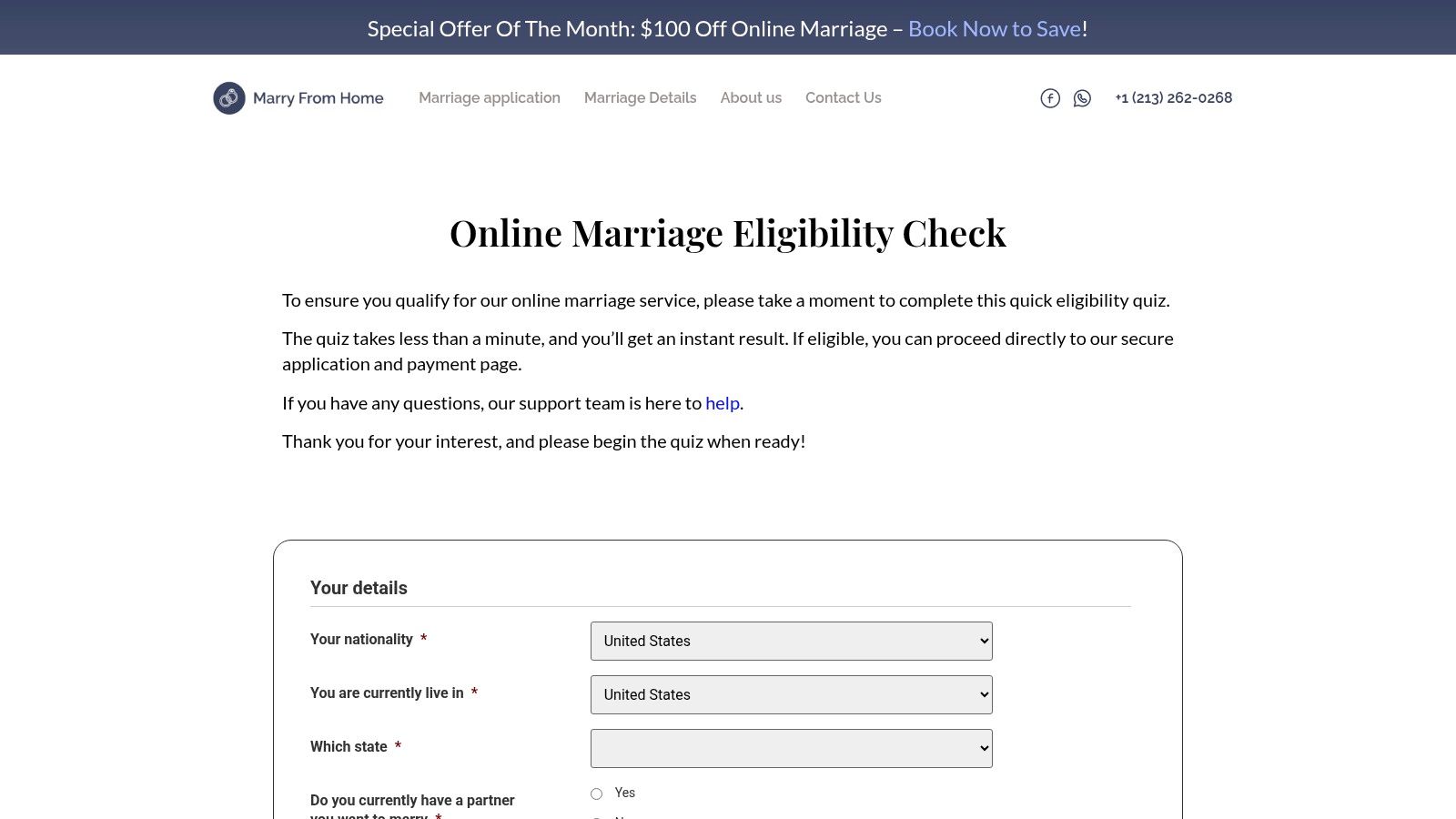
For couples navigating the complexities of modern unions, especially those who are long-distance, in the military, or international, MarryFromHome’s Marriage Application Qualification page is an indispensable first stop. It cuts through the bureaucratic noise by offering a focused, actionable guide on the most critical topic: determining your eligibility for an online marriage license. This resource is expertly designed to transform the often-confusing maze of marriage license requirements by state into a clear, step-by-step process specifically for virtual weddings.
Its primary strength is its direct, user-centric approach. Instead of a dense wall of legal text, the page functions as a practical pre-application checkpoint for an online ceremony. It allows couples to quickly assess their eligibility, gather the correct documents, and sidestep common errors that lead to delays or rejections. This focus on preparation and clarity makes it a standout tool for anyone looking to get legally married online without the stress of guesswork.
Key Features and Practical Benefits
The Marriage Application Qualification page is structured to provide immediate value. Its features are tailored to the specific needs of couples planning a remote or non-traditional wedding.
- Clear Eligibility Checklist: The platform presents a straightforward checklist covering core requirements like age, identification, and the legal status of any prior marriages. This allows you to quickly determine if an online marriage path is viable for your situation.
- Step-by-Step Document Guidance: It provides a precise list of required documents, such as government-issued photo IDs and proof of divorce or a deceased spouse’s death certificate if applicable. This guidance helps you prepare a complete and accurate application package from the start.
- Remote-Friendly and Jurisdiction-Aware: A key differentiator is its focus on the nuances of remote marriages. The page addresses residency rules, waiting periods, and jurisdictional differences, providing essential information for international and cross-state couples who cannot apply in person. This saves significant time and prevents logistical headaches.
- Actionable Next Steps: The page doesn’t just list rules; it translates them into actionable advice. It explains exactly how to navigate the verification process and what to expect when working with an officiant for a remote ceremony, clarifying the distinction between the license and the final certificate.
Use Case Scenario: A Long-Distance Couple
Imagine a couple where one partner is in New York and the other is stationed overseas with the military. Traveling to the same location to apply for a marriage license in person is a logistical and financial challenge. By using the Marriage Application Qualification page, they can:
- Instantly Verify Online Marriage Eligibility: They use the checklist to confirm they meet the age and ID requirements for a jurisdiction that allows fully remote applications.
- Prepare Documents Correctly: They gather their military IDs, passports, and any other necessary paperwork as outlined, ensuring their online application is complete.
- Understand the Virtual Process: They learn about the specific state’s waiting period and how to coordinate with a registered officiant who can perform a virtual ceremony.
- Apply with Confidence: They proceed with their online application, confident they have met all prerequisites, saving them from a potentially rejected application or the need for expensive travel.
The tool’s primary value is its ability to provide clarity and confidence, reducing the administrative burden so couples can focus on their commitment.
| Feature Analysis | Strengths | Limitations |
|---|---|---|
| Eligibility Verification | Fast, clear checklist format saves time and prevents confusion. | Does not cover every unique or complex legal situation. |
| Document Guidance | Reduces common application errors and potential rejections. | Couples must still source their own documents. |
| Remote-Focused Advice | Invaluable for international, military, and long-distance couples. | Not all jurisdictions permit fully remote processes. |
| Overall User Experience | Streamlined, actionable, and easy to navigate. | Serves as a guide, not a substitute for formal legal counsel. |
Ultimately, this resource from MarryFromHome serves as an exceptional starting point, empowering couples with the knowledge needed to successfully navigate the legal requirements of marriage in a digital age.
Visit Marriage Application Qualification
2. USA.gov
USA.gov serves as the U.S. government’s official web portal, offering a trusted, ad-free starting point for finding the source of truth for marriage laws. For those wanting to marry online, its most important function is to act as an authoritative directory, guiding you directly to the official state or county vital records office. This is where you will find the definitive rules on remote applications and virtual ceremonies, making it an indispensable tool for verifying the marriage license requirements by state.
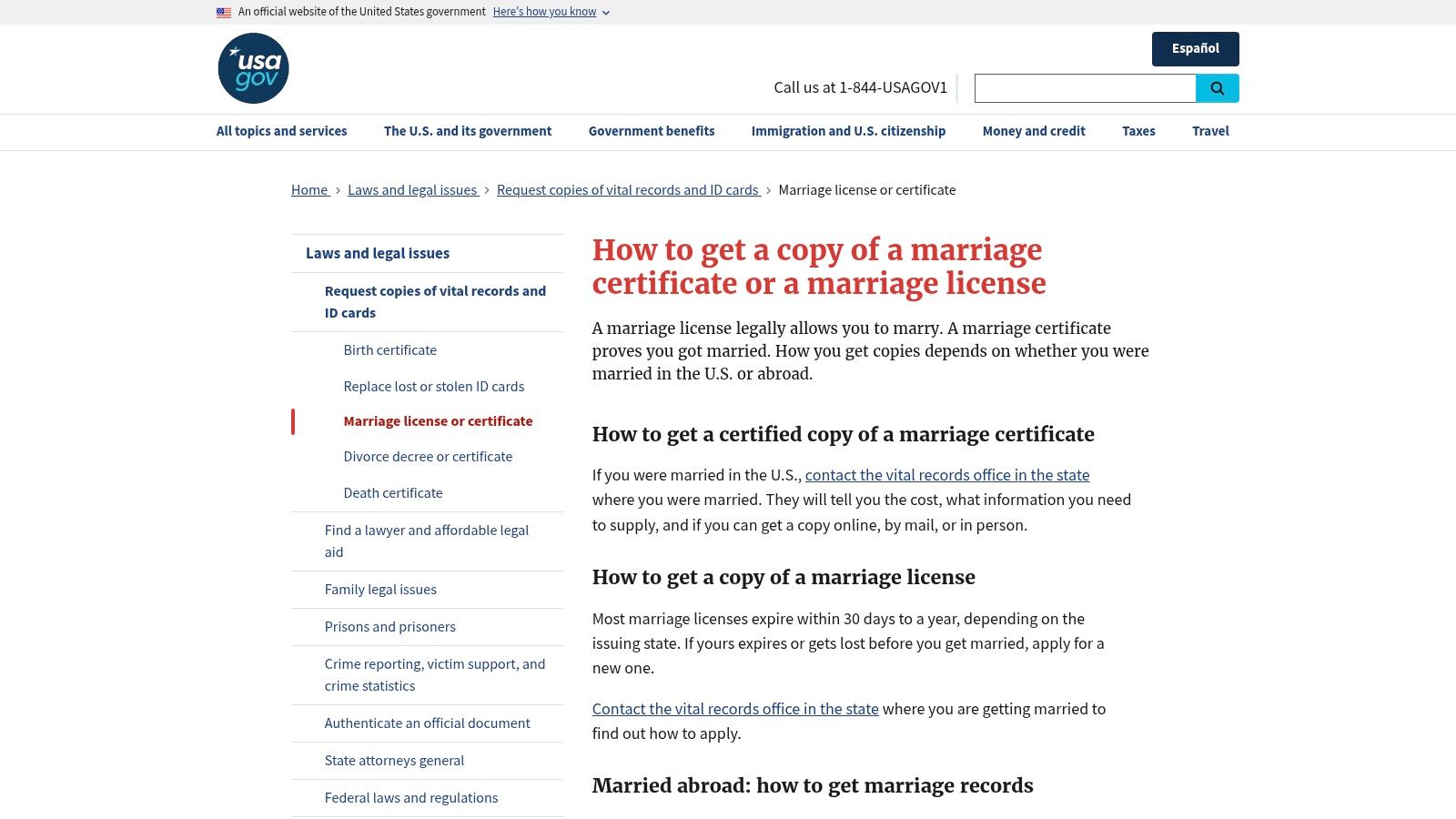
The platform’s primary strength is its simplicity and reliability. It provides clear, plain-language explanations of fundamental concepts, such as the crucial difference between a marriage license (permission to marry) and a marriage certificate (proof of marriage). This foundational knowledge is essential before you begin the application process for an online wedding.
Finding State-Specific and Online Marriage Rules
While USA.gov doesn’t list each state’s rules on a single page, its main feature is a comprehensive, clickable list of all U.S. states and territories. Each link takes you directly to the relevant government agency, such as the Department of Health or County Clerk’s office, that handles marriage licenses.
This direct-to-the-source approach is particularly valuable for couples interested in remote or online marriage options. Many states updated their policies on virtual appearances and remote solemnization, and the official state sites linked from USA.gov are the only places to find the most current and authoritative information on these evolving procedures.
How to Use USA.gov for Online Marriage Research
To get the most out of this resource, follow these steps:
- Start on the Main Page: Navigate to the marriage page on USA.gov.
- Select a Potential State: Click on the state or territory where you plan to get married from their alphabetized list.
- Locate Online Application Info: Once on the official state or county website, look for keywords like “apply online,” “remote appearance,” or “virtual marriage.” This is where you’ll find specific forms and instructions for remote processes.
- Verify Officiant Requirements: The state site will also detail who is authorized to solemnize a marriage, a critical detail for ensuring a virtual ceremony is legally binding.
The platform is completely free to use. The primary limitation is that it’s a directory, not a comparison tool; you must click through to each state’s site to gather specific details. However, for reliability and direct access to official sources, it is an unparalleled resource.
3. FindLaw
FindLaw is a comprehensive legal information hub that offers a well-organized, one-page directory of marriage laws. For couples exploring online marriage, this site is an excellent tool for quickly comparing baseline rules across different states. It synthesizes key information into easy-to-digest summaries, helping you identify states that might have more flexible marriage license requirements by state before you dive into the specific details of their remote application process.
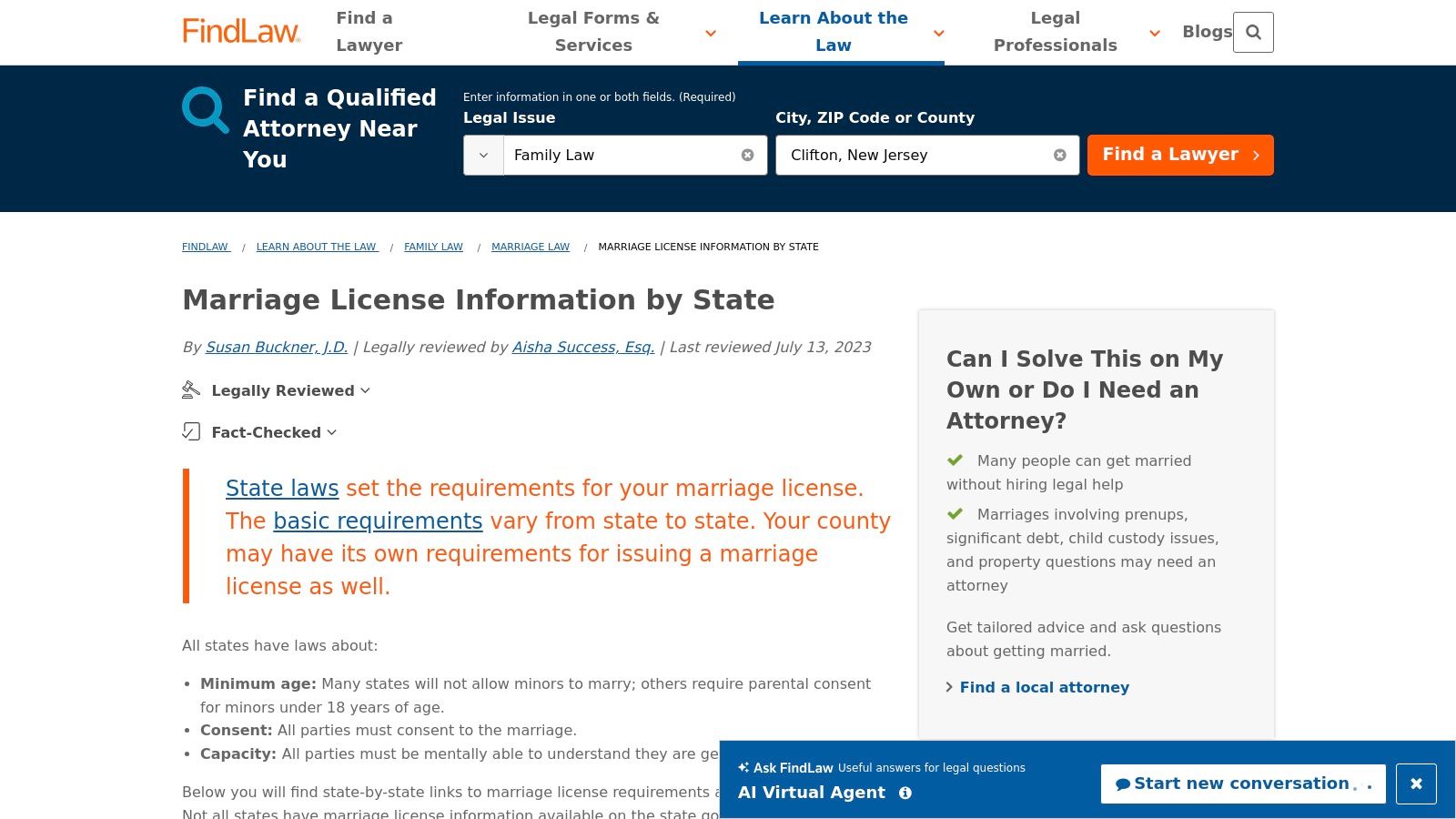
The platform’s major advantage is its clarity and practical focus. Each state entry typically includes a summary of critical factors like minimum age, residency rules, waiting periods, and license expiration timelines. It also provides direct links to the relevant state statutes or government offices, acting as both a summary and a directory.
Identifying States Open to Online Marriage
FindLaw’s state-by-state list is its central feature, providing a valuable starting point for research. By reviewing the summaries, you can quickly spot potential red flags for online marriage, such as strict in-person appearance requirements or short license validity periods. This allows you to narrow your focus to states that appear more accommodating to remote procedures.
While FindLaw’s summaries may not always detail the latest virtual ceremony policies, the links it provides will take you to the official sources that do. Understanding the core requirements first, like ID and age verification, is a crucial step before you learn how to get married online legally in a specific jurisdiction.
How to Use FindLaw Effectively
To get the most out of this resource, follow these steps:
- Start on the Main Page: Navigate to FindLaw’s “Marriage License Information by State” page.
- Select Potential States: Scroll to the states you are considering for your online wedding and click the links to view their summaries.
- Compare Key Requirements: Quickly compare details on residency rules, waiting periods, and license validity to see which states are logistically feasible for a remote ceremony.
- Follow the Official Link: Use the provided link to visit the official state or county website to verify the information and search for details on “online applications” or “virtual solemnization.”
The platform is completely free and supported by ads. The main drawback is that it is a third-party aggregator, so all details must be double-checked against the official sources it links to, as laws and county-specific nuances can change.
Website: https://www.findlaw.com/family/marriage/marriage-license-information-by-state.html
4. Nolo
Nolo is a respected legal publisher known for translating complex legal topics into plain, understandable English. For couples planning an online wedding, Nolo is an invaluable resource for understanding the legal framework that makes a remote ceremony valid. Unlike official government portals that present rules without context, Nolo explains the why behind the requirements, providing the legal background needed to navigate the marriage license requirements by state confidently.
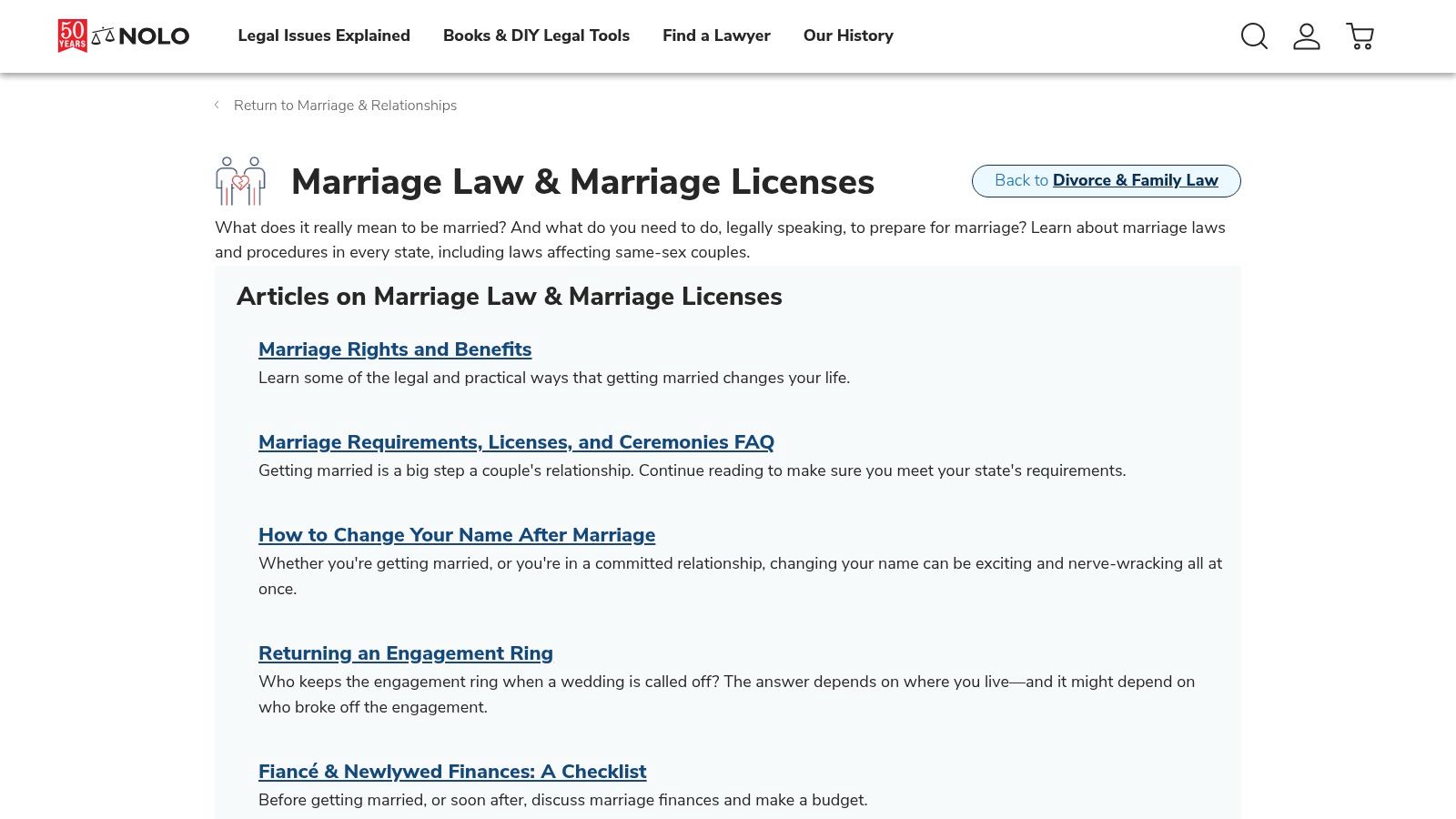
The platform’s core strength lies in its expertly curated articles and state-by-state comparison charts. These resources cover essential topics like waiting periods, license expiration dates, and who is legally permitted to officiate a wedding—all critical factors for a successful online marriage.
Gaining Legal Clarity for Online Marriages
While Nolo doesn’t facilitate online marriage applications directly, its content is crucial for understanding the legalities of remote ceremonies. Articles on the platform clarify who can legally officiate a wedding and what constitutes a valid ceremony, which are critical details for ensuring an online marriage is legally recognized. For instance, Nolo explains the concept of “solemnization” and how different states interpret this for virtual weddings.
The site also features comprehensive FAQs that address common edge cases, such as marrying a non-citizen or understanding the validity of a license across state lines. This vetted legal information helps couples avoid common pitfalls and ensures all legal requirements are met for their virtual ceremony.
How to Use Nolo for Online Marriage Planning
To leverage Nolo for your marriage planning, follow these steps:
- Explore the Marriage Section: Start at Nolo’s main marriage law page.
- Consult State-Specific Charts: Use their comparison charts to quickly see how waiting periods, fees, and license validity differ by state, helping you shortlist viable options.
- Read Explanatory Articles: Dive into articles on topics like “Marriage License vs. Marriage Certificate” or “Who Can Officiate a Wedding?” to understand the legal mechanics of your online ceremony.
- Cross-Reference with Official Sources: Use the information from Nolo to better understand the dense legal text you find on official state and county clerk websites.
Nolo is completely free to access. Its primary limitation is that it’s an informational resource, not an application portal, and its aggregated data may occasionally lag behind very recent changes in local county ordinances.
Website: https://www.nolo.com/legal-encyclopedia/marriage-license
5. WeddingWire
WeddingWire is a consumer-focused wedding planning platform that provides easily digestible summaries of marriage laws from a practical, planning-oriented perspective. For couples considering an online marriage, it’s a great resource for getting a quick, at-a-glance understanding of the essential marriage license requirements by state without navigating complex legal jargon.
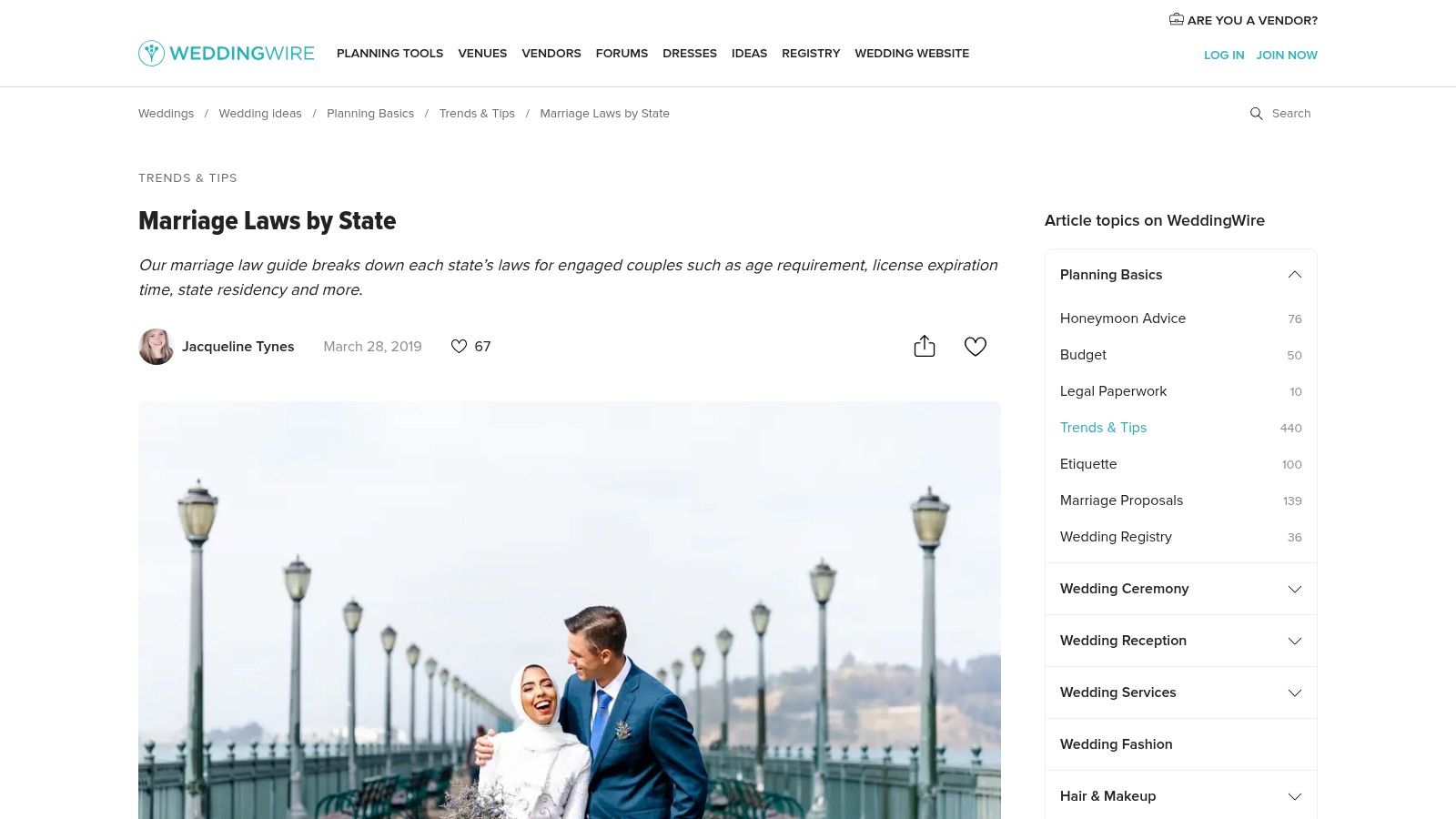
The platform’s major benefit is its consistent, user-friendly format. Each state’s page covers key topics like ID requirements, waiting periods, license expiration, and witness rules in a scannable layout. This consistency simplifies the process of comparing regulations across different states, which is particularly helpful for couples trying to identify the best state for their remote ceremony.
Identifying States Favorable to Online Marriage
WeddingWire’s strength lies in its “Marriage Laws by State” feature, an interactive map that leads to dedicated pages for each U.S. state. These pages summarize the most common requirements, offering a clear starting point for your research.
The platform often addresses whether proxy marriages are allowed, which is a key consideration for remote ceremonies. By quickly identifying a state’s stance on this, couples can narrow down their options for a legally recognized virtual wedding. The content is embedded within a broader suite of planning tools, linking legal requirements to practical next steps like finding an officiant who can perform a virtual ceremony.
How to Use WeddingWire for Online Marriage Research
To get the most out of this resource for online marriage planning, follow these steps:
- Navigate to the Guide: Start at the “Marriage Laws by State” page on WeddingWire.
- Select Your State: Use the interactive map or list to choose a potential state for your online marriage.
- Review the Summary: Scan the key requirements, paying close attention to sections on waiting periods, license validity, and any mention of “proxy marriage” or remote options.
- Cross-Reference for Confirmation: Use the information as your baseline, then visit the official county clerk’s website (often linked from platforms like USA.gov) to confirm every detail before applying.
WeddingWire is completely free to use, supported by its vendor marketplace. Its primary limitation is that it provides editorial summaries, not official legal documents, so all information must be verified.
Website: https://www.weddingwire.com/wedding-ideas/marriage-laws-by-state
6. The Knot
The Knot is a premier wedding planning resource that excels at translating complex requirements into practical, actionable steps for your wedding timeline and budget. For couples planning an online marriage, its content is essential for understanding how the legal rules impact key planning decisions, from scheduling your virtual ceremony to budgeting for the license fee. It helps you integrate the marriage license requirements by state into your overall wedding plan.
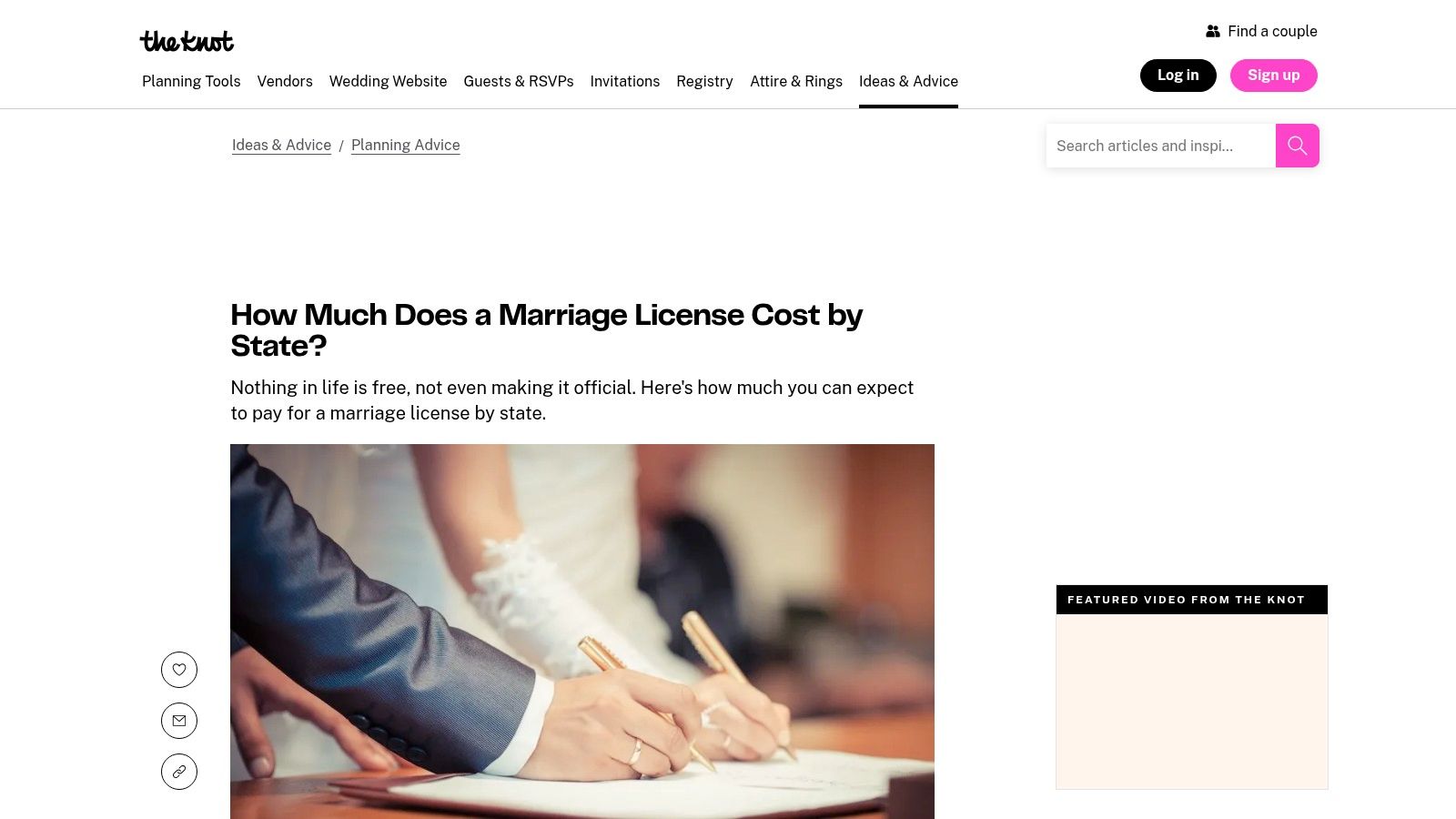
The platform’s major advantage is its planning-centric approach. It provides valuable insights into scheduling your application to align with your ceremony date and understanding the validity period so your license doesn’t expire. This practical focus helps prevent common, last-minute logistical headaches that can derail even a virtual wedding.
Budgeting and Timing Your Online Marriage Application
The Knot provides a helpful nationwide breakdown of estimated marriage license costs, which is invaluable for early-stage budget planning. The site also explains critical timing elements like waiting periods and license expiration dates, helping you map out exactly when you need to apply for your license to have a valid online ceremony.
This guidance is particularly useful for online marriages. Understanding your chosen state’s license validity period is crucial; you need to ensure your virtual ceremony takes place within this window. The Knot’s articles help you create a timeline that accounts for both the application processing time and the window you have to legally solemnize your marriage online.
How to Use The Knot Effectively
To integrate this resource into your planning, follow these steps:
- Start with the Overview: Navigate to The Knot’s articles covering marriage license costs and how to apply.
- Estimate Your Budget: Use their state-by-state cost list to get an initial estimate for your license fee.
- Map Out Your Timeline: Pay close attention to the details on waiting periods and expiration dates. Work backward from your desired ceremony date to determine the ideal application window.
- Cross-Reference for Accuracy: Use the information from The Knot as your planning guide, but always click through to the official county clerk’s website to verify the exact fees and rules for remote applications.
The website is free to use, supported by ads and vendor listings. Its primary limitation is that its content is editorial and provides general guidance. However, for translating bureaucratic requirements into a clear, actionable wedding planning checklist, The Knot is an outstanding resource.
Website: https://www.theknot.com/content/how-much-does-it-cost-to-get-married
7. Utah County (Official) — Online Marriage License Application
The Utah County Clerk’s Office offers a pioneering, fully digital system that is the gold standard for getting married online. For couples seeking a completely remote experience, this platform allows you to apply for, receive, and have your marriage license solemnized and filed without ever setting foot in a government building. It is the most actionable resource for couples worldwide who want a legally recognized U.S. marriage, making it a crucial case study in modern marriage license requirements by state.
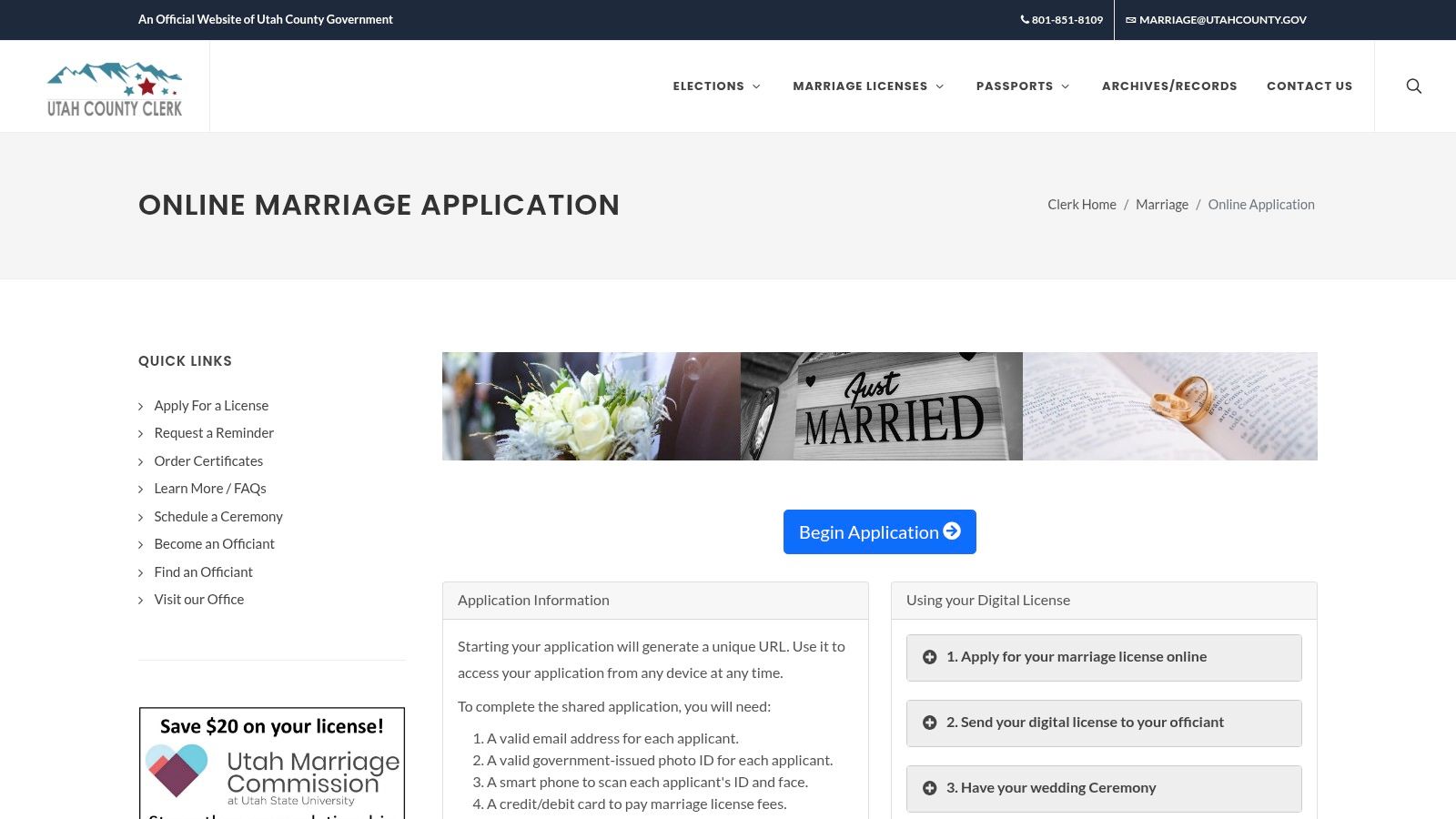
The platform’s main advantage is its end-to-end online workflow. Unlike systems that only allow you to start an application online, Utah County lets you complete every step digitally. From ID verification via smartphone to electronic payment and digital delivery of the license, the entire process is designed for remote users. This service is available to couples globally, provided the ceremony is conducted in compliance with Utah law.
The Blueprint for a Successful Online Marriage
While the platform is specific to Utah County, it provides a transparent blueprint for what a fully online marriage license process entails. The site features a detailed checklist and a comprehensive FAQ section that answers critical questions about the digital workflow, officiant requirements, and the legal validity of the marriage. The license issued is a legal Utah marriage license, valid for ceremonies performed by a Utah-compliant officiant.
This system is the go-to solution for those exploring online marriage, as it’s one of the few government-backed services that truly facilitates it from anywhere in the world. For more information on which other jurisdictions offer remote services, you can explore a full breakdown of U.S. states that allow online marriage.
How to Use Utah County’s Site Effectively
To navigate this fully online process successfully, follow these steps:
- Start the Online Application: Navigate to the official Utah County marriage license page and begin the application. Each partner will need a separate email address.
- Complete the Checklist: The system guides you through uploading a selfie and a government-issued photo ID, filling out personal information, and paying the application fee online.
- Receive Your Digital License: Once approved, you will receive the marriage license via email, ready to be used in your virtual ceremony.
- Ensure Officiant Compliance: Your chosen officiant must be authorized to perform ceremonies under Utah law. After the ceremony, they will complete their portion and submit it back to the county clerk digitally. A paper copy of your certified marriage certificate is automatically mailed the next business day.
The process is remarkably efficient, but applicants should pay close attention to the technical requirements. The primary limitation is that the license must be used for a ceremony conducted under Utah’s jurisdiction, though you and your partner can be located anywhere. For its transparency and fully remote convenience, it sets the standard for online marriage services.
Website: https://www.utahcounty.gov/dept/clerk/marriage/marriagelicense.html
Marriage License Requirements by State — 7-Source Comparison
| Item | Implementation complexity | Resource requirements | Expected outcomes | Ideal use cases | Key advantages |
|---|---|---|---|---|---|
| Marriage Application Qualification (MarryFromHome) | Low — step-by-step guidance | Internet access, identity documents, paperwork checklist | Quickly determine online eligibility and prepare required documents | Long-distance and international couples assessing remote options | Clear eligibility checklist, jurisdiction-aware, time-saving |
| USA.gov | Low — informational portal linking to official offices | Internet access to follow state links | Locate authoritative state/territory offices and official instructions | Users needing to verify online marriage rules at the source | Government-run, reliable, ad-free, editorially updated |
| FindLaw | Low — aggregated state summaries and links | Internet access, verify with official pages | Fast state-by-state summaries to compare potential locations | Quick cross-state comparisons for remote marriage viability | Practical one-page directory, actionable local pointers |
| Nolo | Low — legal explainers and comparison charts | Internet access, may need official verification | Understand legal context of virtual ceremonies and officiants | Users who want plain-English legal context for online marriage | Vetted, easy-to-read explanations and FAQs |
| WeddingWire | Low — planning-oriented state summaries | Internet access, planning tools and vendor links | Rapid answers to common requirements for planning | Couples needing a quick check on rules like proxy marriage | Consistent formatting, frequently updated, planning-focused |
| The Knot | Low — cost and timing guidance | Internet access for cost lists and timing tips | Estimate fees and map application timing to wedding date | Budgeting and scheduling a virtual ceremony and license | State cost estimates, timing guidance for deadlines |
| Utah County (Official) — Online Marriage License Application | Medium — end-to-end digital workflow with verification steps | Smartphone for ID selfie/scan, payment card, internet, compatible browser | A legal, globally-recognized US marriage license and certificate | Couples worldwide who want a fully online marriage process | True end-to-end online application, transparent pricing, fast issuance |
Your Next Step to a Legal Online Marriage
Navigating the intricate landscape of marriage license requirements by state can feel like the first big hurdle, especially when planning an online ceremony. As we’ve detailed, the rules surrounding everything from identification and waiting periods to the legality of virtual ceremonies vary dramatically. The resources in this guide are designed to arm you with the information you need to find a viable path to getting married online.
The most critical takeaway is the principle of verification. While these resources provide an excellent starting point, the ultimate source of truth is always the official county clerk’s office in the state where you plan to obtain your license. This is particularly vital for online marriages, where a select few jurisdictions, like Utah County, have become pioneers in offering fully remote application and ceremony processes that are legally recognized nationwide.
Key Takeaways for Your Online Marriage Journey
As you move forward, keep these core insights at the forefront of your planning to ensure a smooth, legally sound process:
- Not All States Are Equal: Only a handful of states, most notably Utah, have established a clear and accessible framework for couples worldwide to get married online. Focusing your research on these “online-friendly” states will save you immense time and potential legal headaches.
- Documentation is Paramount: Regardless of the state, your application will hinge on having the correct documentation ready. This almost always includes government-issued photo IDs for both partners, and may require certified copies of birth certificates or divorce decrees. Gather these documents early.
- Timelines Matter: Pay close attention to waiting periods (the time between getting your license and being able to marry) and expiration dates (the window you have to use the license). An online marriage still has to adhere to these strict legal timelines.
- Official Sources are Gold: Always cross-reference information with the official county or state government website. Policies can and do change, and third-party resources might not always have the most up-to-the-minute information.
Your Actionable Path to “I Do” Online
With this comprehensive guide to marriage license requirements by state, you are no longer just researching; you are actively planning. The next step is to transition from research to action. For couples specifically seeking the convenience and accessibility of an online wedding, this means focusing on the jurisdictions that explicitly permit it.
The process offered by Utah County stands out as the most streamlined and established option for a legally binding virtual ceremony. It removes geographical barriers, allowing you to marry from anywhere in the world. However, navigating even a simplified government process can be daunting, involving precise scheduling, document submission, and coordinating with a licensed officiant.
This is where specialized services become invaluable. Instead of piecing together the process yourself, you can partner with a service that understands the nuances of the system. They handle the administrative load, from application assistance to booking a certified officiant and ensuring all legal protocols are met. This allows you to focus on the joy and significance of your commitment, rather than the stress of the paperwork. Your online wedding should be a celebration, not a bureaucratic puzzle. By leveraging the right information and the right support, you can make that a reality.
Ready to take the final step and make your online marriage happen without the hassle? Marryfromhome.com specializes in navigating Utah’s remote marriage license process, providing a complete service that includes application guidance, a legal officiant, and your official marriage certificate. Let us handle the complexities so you can focus on your special day by visiting Marryfromhome.com to get started.


