


Getting a marriage license in Indiana is refreshingly simple, making it a top choice for couples planning an online wedding. You just visit a county clerk’s office, provide valid ID, pay a small fee, and you’re good to go.
One of the best parts for online ceremonies? There is no waiting period. This means you can get your license the very same day you apply, which is a huge relief for couples who want a fast, straightforward legal process without the traditional hurdles.
Your Fast Track to Getting Married in Indiana
Planning a wedding is exciting, but the legal paperwork can feel like a chore. This guide is here to cut through the noise and give you a clear, simple path to getting your Indiana marriage license, specifically for your online ceremony.
To help you get a quick sense of what’s involved, here’s a snapshot of the key details.
Indiana Marriage License At a Glance
| Requirement | Details |
|---|---|
| Minimum Age | 18 years old (or 16-17 with a court order). |
| Residency | Apply in an Indiana resident’s county. If both are non-residents, apply where the ceremony will be held. For online weddings, this is the county you choose. |
| Waiting Period | None. You can get your license the same day you apply. |
| License Validity | Valid for 60 days from the date of issue. |
| Application Fee | Varies by county, typically $20 – $50. |
| Required ID | Valid government-issued photo ID (Driver’s License, Passport, etc.). |
This table covers the basics, but let’s dive into what this all means for your online wedding.
What You Really Need to Know
Indiana’s system is a perfect fit for modern couples, especially those looking at an online wedding. The state’s minimal requirements get rid of common hurdles, giving you a ton of flexibility.
Here’s a breakdown of what makes the process so accessible:
- Who Can Apply: As long as you’re at least 18 years old (or meet the specific rules for minors) and aren’t currently married, you’re eligible.
- Where to Go: If one or both of you live in Indiana, you’ll apply in the county where one of you resides. If neither of you are residents, you simply apply in the county where your online ceremony will be legally based.
- What to Bring: All you’ll need is a valid ID, like a driver’s license, state ID, or passport, to prove your age and identity. It’s that simple.
This streamlined approach is a game-changer. Indiana’s lack of a waiting period makes it one of the fastest states in the country to get legally married. Couples can literally walk into the county clerk’s office, apply together, show their IDs, pay the fee (usually $20-$50, depending on the county), and walk out with their license. For more state-by-state comparisons, you can check out this helpful marriage license survey from Justia.
The real beauty of Indiana’s system is its simplicity. It’s designed to help you get married, not to stand in your way. Once you have that official piece of paper, you have the legal green light for your ceremony—whether it’s in person or online.
With a valid Indiana license in hand, services like MarryFromHome fit right into the process, allowing you to have a fully legal and binding online ceremony. This turns what could be a complex legal step into a simple, stress-free part of your journey to marriage.
Gathering Your Essential Documents
A little prep work now saves a massive headache later. Showing up at the county clerk’s office with all your ducks in a row is the secret to a smooth, one-trip visit. Think of it as your pre-wedding checklist—getting this right means you can focus on the exciting part.
The good news? Indiana doesn’t ask for a mountain of paperwork. But the documents they do require have to be the right ones.
Core Identification and Proof of Age
First things first, you’ll both need a valid, government-issued photo ID. This is the big one, the non-negotiable item the clerk uses to verify who you are and that you’re old enough to marry.
Most people use one of these:
- A valid Driver’s License (this is the most common)
- State-Issued Identification Card
- A U.S. or foreign Passport
- Military ID for active-duty service members
The key word here is valid. An ID that expired yesterday is just as bad as no ID at all. Double-check those expiration dates before you leave the house.
Key Takeaway: Both of you have to show up in person, and each of you needs your own original ID. The clerk has to match your face to your document right then and there.
Information Needed for the Application
Beyond your physical ID, the application itself will ask for some specific family history. You don’t typically need to bring birth certificates for your parents, but you absolutely need to know the information.
Have this info handy to avoid any awkward pauses or frantic phone calls from the clerk’s counter:
- Parents’ Full Names (first, middle, and last)
- Parents’ Last Known Address (city and state is usually fine)
- Parents’ Place of Birth (the state or country)
Jotting this down on a piece of paper beforehand makes you look prepared and keeps the line moving. It’s especially helpful if your county offers an online pre-application portal, which can be a real time-saver. If you’re wondering what other documents might come up in unique situations, check out our complete guide on what you need for a marriage license.
Documents for Previous Marriages
If this isn’t the first marriage for either of you, this part is critical. You must prove that any previous marriage has officially ended. Without this proof, the clerk legally cannot issue you a new license. It’s a hard stop.
You’ll need to bring a certified copy of the divorce decree for every prior marriage. If a former spouse is deceased, you’ll need a certified copy of the death certificate. A regular photocopy from your home printer won’t cut it—the document must be an official version with a stamp or raised seal from the court or vital records office.
Navigating the Application at the County Clerk’s Office
Alright, you’ve got your documents gathered and you’re ready for the main event: visiting the county clerk. Let’s walk through what to expect on application day, especially if you’re getting this license for an online ceremony.
The single most important thing to get right is where you apply. It’s a simple rule, but getting it wrong can throw a serious wrench in your plans, especially if your ceremony is virtual.
Where You Apply Matters for an Online Wedding
Here’s the breakdown—it’s actually pretty straightforward.
If at least one of you is an Indiana resident, you must apply in the county where that resident lives. Once you have that license, your online ceremony is valid anywhere in the state.
If neither of you lives in Indiana, you’ll apply in the county where your online ceremony will be legally held. This is a crucial detail for couples using a service like MarryFromHome for a virtual ceremony. You’ll need to designate an Indiana county as your official “venue” and apply for your license there.
This simple graphic shows the three core pieces you’ll need to have ready.
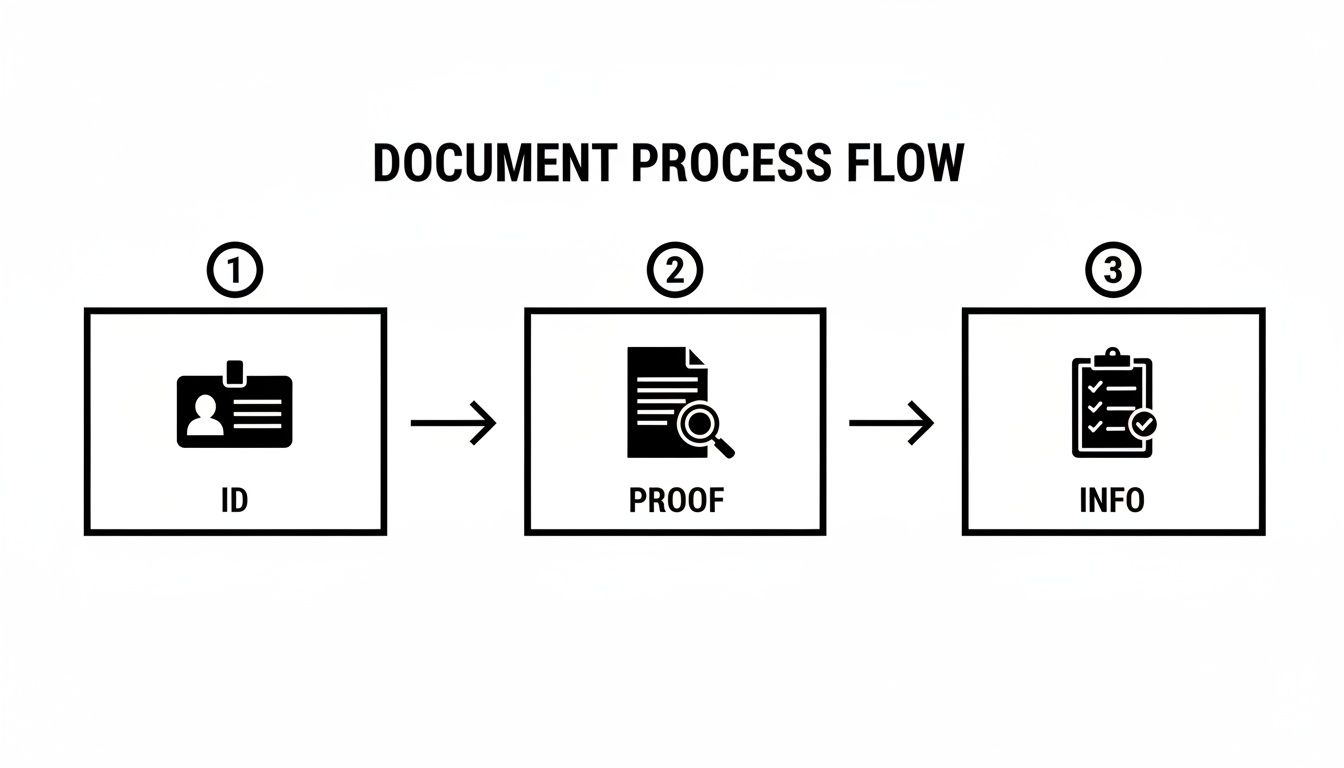
Think of it this way: you need to prove who you are, show you’re free to marry, and provide the basic info for the application form.
The In-Person Experience
Once you walk into the right office, the process is usually pretty quick. You’ll hand over your documents, fill out the application if you haven’t started it online, and pay the fee.
The cost varies a bit by county but typically lands somewhere between $20 and $60. It’s always a smart move to call ahead or check the county clerk’s website for the exact amount and what kind of payments they take. Some smaller offices might still be cash-only.
Insider Tip: Remember, you both have to show up in person. This isn’t something one of you can handle alone. The final step is taking an oath, swearing that all the information you’ve provided is true before you sign the application in front of the clerk. This in-person step is the one legal requirement before your fully online ceremony.
Many of the larger counties, like Marion County (where Indianapolis is), have modernized a bit. They let you fill out a pre-application online, which can save a ton of time at the office. But even with that, Indiana law still requires that final in-person visit to verify your IDs.
The state has made the process pretty efficient, as laid out in the Indiana Code—there are no blood tests and no waiting periods after a divorce is finalized. You can dig into the state’s marriage statutes and find more details about Indiana marriage reports if you’re curious.
After you’ve taken the oath and paid the fee, the clerk will issue your marriage license right then and there. That’s it! You’re officially cleared to get married anywhere in Indiana.
You Have Your License, Now What?
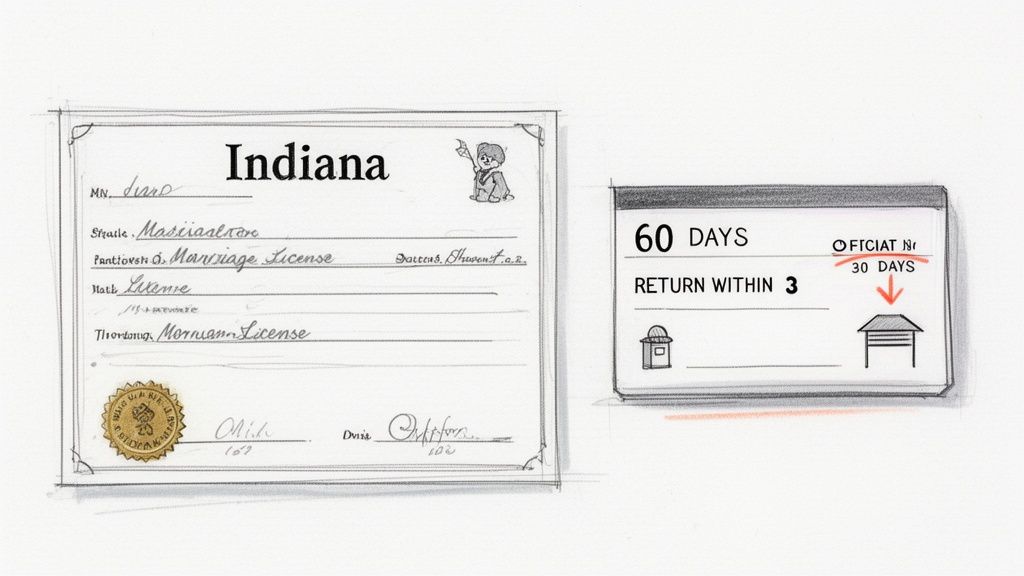
Congratulations! You’ve successfully navigated the county clerk’s office and now hold the official document that lets you get married. This piece of paper is your golden ticket for your online wedding, but it comes with a strict timeline. The clock is officially ticking.
Think of your Indiana marriage license as a permission slip. It doesn’t mean you’re married yet—it just authorizes a qualified officiant to legally perform your ceremony. This is a critical distinction because the license itself has an expiration date.
Understanding the 60-Day Countdown
From the moment that license is in your hands, you have exactly 60 days to hold your wedding ceremony. This is a hard deadline. If you let those 60 days pass without tying the knot, the license becomes void, and you’ll have to go right back to the clerk’s office and start the application process all over again.
This is where the flexibility of an online ceremony really shines. With your valid Indiana license, there’s no need to scramble to find an available venue or officiant. You can schedule your ceremony quickly and get it done.
The 60-day validity period is your green light. It empowers you to move forward with your ceremony, whether that’s a grand affair or an intimate online celebration right from your living room.
Services like MarryFromHome are designed to work perfectly within this timeframe. Once you have your license, you can book one of our online officiants who will perform a legally recognized ceremony, ensuring you meet the state’s requirements long before your license expires.
The Role of Your Officiant
Your officiant does more than just lead the ceremony; they are a key player in making your marriage legal. After you’ve said your vows, your officiant is the one who completes and signs the marriage license.
That signed document is what officially transforms your license into a legal record of your marriage. But their job isn’t quite done. They are responsible for one last, crucial step.
Here’s what your officiant will handle after the ceremony:
- Properly Signing and Dating: They’ll fill out their designated section on the license, including their name, title, and the date and location of the ceremony.
- Meeting the Return Deadline: Indiana law requires the completed license to be returned to the very same county clerk’s office that issued it.
- Ensuring Official Recording: The officiant makes sure the document gets back to the correct office, where it will be officially recorded, finalizing your legal marriage.
Missing this final step can cause serious legal headaches and could even invalidate your marriage down the line. This is why working with a professional and reliable officiant is so important. Whether they are in-person or with a trusted online service, they understand the deadlines and procedures needed to get your Indiana marriage license properly recorded, guaranteeing every legal box is checked.
Handling Special Cases and Common Mistakes
Not every trip to the clerk’s office is a straight shot. Sometimes, life circumstances add a few extra steps to the process, and simple oversights can throw a wrench in your wedding plans. Knowing how to handle these situations is key to keeping everything on track for your online wedding.
Navigating the rules for applicants under 18 or for non-U.S. citizens can feel intimidating, but it’s totally manageable with the right info. Likewise, knowing the common mistakes people make—like bringing the wrong document or missing a deadline—can save you a world of frustration.
Navigating Underage Marriage Requirements
In Indiana, you generally need to be 18 years old to get married. However, the state does have a path for 16 and 17-year-olds, but it’s a formal legal process, not just a simple application.
You can’t just show up with a parent and call it a day. The process for minors is serious and requires:
- Parental Consent: Both parents (or the legal guardian) have to be on board and give their consent.
- Court Approval: The couple and their parents must file a petition with the local juvenile court. A judge will then schedule a hearing to decide if getting married is truly in the minor’s best interest.
- A Court Order: If the judge agrees, they will issue a court order. This is the document you’ll take to the county clerk, giving them the legal authority to issue the marriage license.
This isn’t something you can rush. It involves the court system and requires planning well in advance of your wedding date.
Guidance for Non-U.S. Citizens
If you or your partner aren’t a U.S. citizen, don’t worry—you can absolutely get a marriage license in Indiana. The core requirement is the same for everyone: you need to present a valid, government-issued photo ID to prove your identity and age.
In this scenario, a foreign passport is the perfect document to use. That’s really all the clerk’s office needs to see. You are not required to have a Social Security Number to apply for a marriage license in Indiana.
Avoiding Common Application Delays
Even the most prepared couples can hit a snag. To keep your online wedding timeline on track, you’ll want to steer clear of a few common mistakes that trip people up.
Getting ahead of these potential issues is especially important if you’re on a tight timeline. For a broader overview of what’s needed, you can learn more about what qualifies you for a marriage application on our blog.
Key Takeaway: The most frequent delays are almost always preventable. A few minutes of double-checking your paperwork and understanding the deadlines can save you from a massive headache and a second trip to the clerk’s office.
Here’s a quick guide to help you sidestep the most common pitfalls we see.
Common Delays and How to Avoid Them
| Potential Pitfall | Solution |
|---|---|
| Expired License | Your license is only valid for 60 days. Make sure your ceremony is scheduled well within this window. |
| Incorrect Divorce Decree | Don’t bring a photocopy. You need a certified copy of the final divorce decree, which usually has a raised seal from the court. |
| Forgetting to Return It | The signed license must be returned to the same clerk who issued it. Confirm with your online officiant that they will handle this step for you. |
| Applying in the Wrong County | Remember the rule: Apply in the county where at least one of you lives. If neither of you are Indiana residents, apply in the county where your online ceremony will be legally based. |
Taking a moment to review these points can make all the difference between a smooth process and a stressful one. A little preparation goes a long way
Using Your Indiana License for an Online Wedding
This is where tradition meets today’s world. Once you have that official Indiana marriage license in your hands, you’ve unlocked a ton of flexibility for your actual wedding ceremony, especially if you’re planning on going virtual.
Think of the physical document from the county clerk as your legal green light. It gives a qualified officiant the power to solemnize your marriage, and here’s the best part—that officiant doesn’t have to be in the same room, or even the same state, as you.
How an Online Ceremony Works
Services like MarryFromHome are built to work perfectly with your state-issued license. As soon as you have the document, you can book one of our professional online officiants. They’ll perform a fully legal and binding ceremony for you over a simple video conference.
This is a game-changer for couples in different cities, those with international partners, or really anyone who just wants a straightforward, stress-free wedding without all the travel and logistical headaches. It’s a ceremony that fits your life, not the other way around.
The key takeaway is this: your marriage is legally solemnized under the authority of your Indiana license. The virtual setting is just the venue, making your wedding accessible from literally anywhere in the world.
Indiana’s straightforward license process has deep historical roots, connecting your modern ceremony to a rich past. The state’s meticulously kept records offer a fascinating look into over two centuries of unions. You can even explore the Indiana Marriages Database from 1811-2019 to see how this data-rich system blends tradition with today’s need for efficiency.
Finalizing Your Legal Marriage
After you’ve said “I do,” there’s one last crucial step. Your online officiant will digitally sign the license and walk you through completing your portion. They then take care of getting the signed document back to the correct Indiana county clerk’s office for official recording.
This final action is what makes your marriage official and gets it on the books. It transforms your license from a simple permit to marry into a permanent, legal record of your union. If you’re curious to learn more about the legal side of things, check out our guide on whether you can get a legal marriage license online.
Got Questions About Your Indiana Marriage License?
Getting the details straight for your Indiana marriage license can feel a little confusing, especially when you’re planning a modern, online ceremony. It’s totally normal to have a few last-minute questions pop up. Let’s clear up the most common ones right now.
What’s the Deal With a Marriage License vs. a Certificate?
This is a super common question, and the distinction is pretty simple.
Think of your marriage license as the permission slip to get married. It’s the official document you pick up from the county clerk’s office before your wedding ceremony.
Your marriage certificate, on the other hand, is the legal proof you get after the ceremony. It’s the official record showing the world that you are legally married.
Can We Just Apply for the Indiana License Online?
Not entirely, and this is a crucial point to remember for your online wedding plans. While some Indiana counties (like Marion County) have a handy online portal to get your application started, it’s just a pre-application.
Indiana law is firm on this: both of you must show up in person at the clerk’s office. This is where they’ll check your IDs, have you take an oath, and officially sign the paperwork. There’s no getting around this quick, in-person visit.
Your online wedding with a service like MarryFromHome is completely legal with a valid Indiana license. But that license itself requires a quick trip to the county clerk. This in-person step is the non-negotiable legal foundation for your amazing virtual wedding.
How Does a Physical License Work for an Online Wedding?
It’s actually a really smooth process. Once you have that official Indiana marriage license in your hands, you’re ready for the fun part.
You’ll have your ceremony with an online officiant over video. They will legally solemnize your marriage right then and there. After you’ve said your “I do’s,” your officiant takes over. They handle signing the license and making sure it gets sent back to the right Indiana county clerk to be officially recorded. You don’t have to worry about the post-ceremony paperwork.
Do We Need to Find Witnesses for Our Indiana Ceremony?
Nope! This is one of the best parts about getting married with an Indiana license. Indiana is one of a handful of states that does not require witnesses at your ceremony.
This makes it an absolute perfect choice for couples who want a private, intimate elopement or a hassle-free online wedding. It’s just you, your partner, and the officiant needed to make it all official.
Ready to pair that Indiana marriage license with a ceremony that’s just as simple and beautiful? Marryfromhome.com connects you with professional officiants for legally recognized online wedding ceremonies. Get married from anywhere, on your terms. Book your stress-free o


