


Getting married is a huge personal milestone, but it’s much more than just a ceremony and a party. It’s a major legal move that fundamentally changes your rights, responsibilities, and how the world sees you. The second your marriage is official, your legal status shifts, opening up a whole new world of financial, medical, and social advantages. For couples who choose to marry online, understanding these changes is key, since they offer immediate, powerful protections no matter where you are in the world.
The Legal Transformation After Saying “I Do”
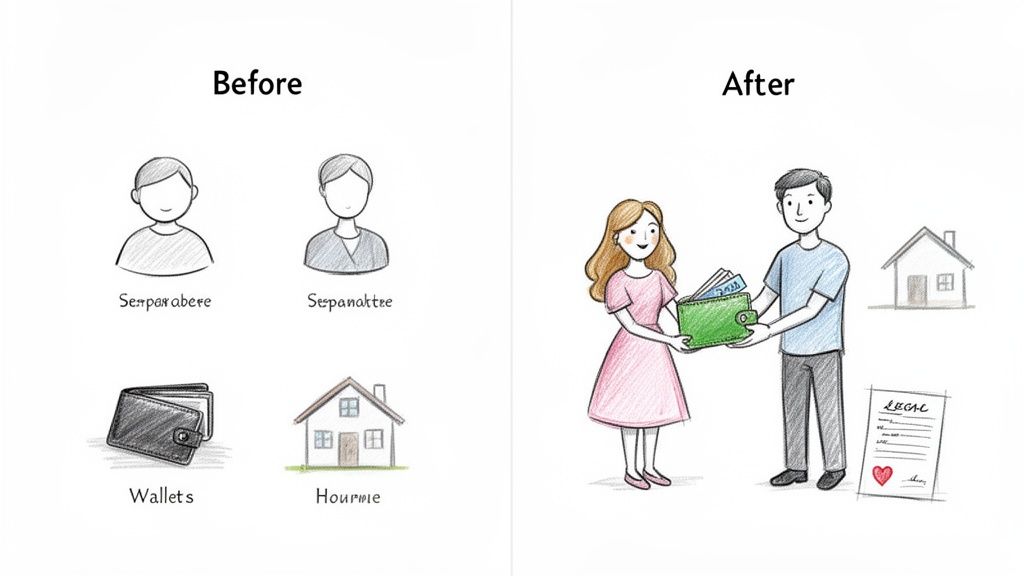
When you get married, you’re essentially merging two separate legal identities into a single, recognized partnership. This isn’t just symbolic—it has real, tangible consequences that touch everything from your tax returns to your healthcare decisions. Think of it like forming a business partnership for your life; you now have a co-owner for your most important assets and choices.
This legal shift is a game-changer, especially for couples in long-distance or international relationships who marry online. An online marriage instantly provides a legal framework, granting spousal rights that would otherwise require piles of complicated and expensive legal paperwork to even come close to replicating.
Your New Status From Day One
Before you get married, you’re just two separate people in the eyes of the law. You file your own taxes, you make your own medical decisions, and your property is yours alone. After the wedding, the government, banks, and hospitals see you as a single family unit.
This change creates a powerful safety net. For instance, if one of you gets sick, the other is automatically seen as the next-of-kin, with the authority to make critical medical decisions. Unmarried partners often have to go to court to fight for that same right. Marriage also simplifies things like inheritance, insurance coverage, and even immigration processes—all accessible the moment your online marriage is legally certified.
For couples married online, this is the core value: an online marriage creates a legal framework that automatically grants couples rights and protections. It’s the difference between having a verbal agreement and a signed contract—one is based on trust, the other is legally enforceable anywhere.
Understanding what changes legally when you get married lets you tap into all the benefits of your new status right away.
Your Legal Status Before and After Marriage at a Glance
To make this crystal clear, let’s break down the “before and after.” The table below gives you a quick snapshot of how dramatically your legal and financial standing changes once you’re married. For those marrying online, these changes are immediate and universal.
| Area of Life | As an Unmarried Individual | As a Legally Married Spouse (Online or In-Person) |
|---|---|---|
| Taxes | You must file as a single individual or head of household. | You can file taxes jointly, often leading to a lower tax bill. |
| Medical Decisions | You have no automatic right to make medical decisions for your partner. | You are legally recognized as next-of-kin with decision-making authority. |
| Inheritance | You are not automatically entitled to your partner’s assets without a will. | You have automatic inheritance rights to a portion of your spouse’s estate. |
| Property | Assets and debts acquired are solely your own. | Assets acquired during the marriage are typically considered joint marital property. |
| Benefits | You cannot access a partner’s Social Security or retirement benefits. | You may be eligible for spousal and survivor Social Security benefits. |
| Insurance | You cannot be added to a partner’s employer-sponsored health plan. | You can be added to your spouse’s health, auto, and other insurance policies. |
As you can see, the shift is significant across the board. From finances to family matters, getting married legally provides a structure that protects both of you in ways that just aren’t available to unmarried couples.
How Marriage Unlocks Financial and Tax Advantages

When you tie the knot, one of the biggest shifts you’ll notice is in your finances. Getting legally married opens up a whole new world of benefits that can seriously strengthen your financial footing. In the U.S., married couples often see a household income that’s about 15-20% higher than their single friends. A lot of that comes from having two earners, but tax perks play a huge role, too. In 2023, filing jointly saved married couples around $1,200 on average in federal taxes, according to IRS data. You can dig deeper into these numbers and see the trends for yourself by checking out the latest data on marriage and economic stability.
You can almost think of your marriage as a business merger. You’re taking two separate households and combining them into a single, more efficient unit. This is especially powerful for couples who get married online, since that legal recognition instantly gives you access to all these financial tools, no matter where you are in the world.
Unlocking Significant Tax Benefits
One of the first and most powerful financial changes you’ll see is with your tax filing status. Once you’re married, you have the option to file your taxes jointly, and this often bumps you into a much friendlier tax bracket than if you were filing as two single individuals.
This is a game-changer if one of you earns a lot more than the other. Filing jointly can bring the higher earner’s taxable income down, which can lead to some pretty big savings. It works because the tax system is progressive, and combining your incomes can smooth out the overall tax hit.
This perk kicks in the moment your marriage is legally official. For couples choosing an online marriage, you can start mapping out your joint financial strategy and get ready for the next tax season right after the virtual ceremony.
Actionable Tip for Online Marriages: As soon as you receive your digital marriage certificate, schedule a consultation with a tax professional. You can begin planning your joint filing strategy immediately, even if you are living in different countries.
Building a Stronger Retirement Safety Net
Beyond just saving on your yearly taxes, getting married builds a powerful long-term financial safety net through Social Security and retirement benefits. These are critical protections that unmarried couples simply can’t access.
Here’s how it helps secure your future:
- Spousal Social Security Benefits: Let’s say your career earnings were lower than your spouse’s. You might be able to claim a spousal benefit based on their work history. This could be up to 50% of your spouse’s full retirement amount—a figure that might be way higher than what you’d get on your own.
- Survivor Benefits: If your spouse passes away, you are entitled to survivor benefits. This provides a crucial stream of income and stability during an incredibly tough time, making sure you aren’t left in a difficult financial spot.
- Access to Retirement Accounts: Marriage makes inheriting a spouse’s 401(k) or IRA much simpler. As the beneficiary, a surviving spouse can usually roll those funds directly into their own retirement account without facing immediate tax penalties.
Navigating Shared Debts and Assets
Just like any good merger, joining forces means you’re also sharing liabilities. When you get married, the law starts to see you as a single economic unit, which changes the rules for both debts and assets.
Generally, any debt you bring into the marriage stays yours alone. But any new debt you take on after the wedding—think a mortgage, a car loan, or a joint credit card—is typically seen as a shared responsibility. This is a must-have conversation for every couple, especially if you’re managing your finances from different places after an online wedding. Open communication and a clear financial plan are the bedrock of a healthy financial future.
Beyond the tax breaks and insurance discounts, getting legally married gives you and your partner a powerful set of rights that truly matter when life throws you a curveball. It automatically makes you each other’s next-of-kin, creating an instant, legally recognized safety net.
This isn’t just a piece of paper; it’s a fundamental shift in your ability to care for one another. For couples tying the knot online, especially if you live in different cities or even countries, these built-in protections provide incredible peace of mind without needing a stack of complex, expensive legal documents.
The law sees you differently as a married couple, especially when it comes to making decisions and inheriting property. You get protections that people just living together don’t have. For instance, in the U.S., marriage gives you the automatic right to make medical decisions for your spouse if they can’t. Unmarried partners often have to fight for this in court—a heartbreaking scenario that happens in 40% of contested cases, according to AARP.
The same goes for inheritance. Across the EU, married partners inherit automatically. In France, a spouse gets 50-100% of the assets even without a will, while a common-law partner could be left with nothing. If you’re curious about how these laws vary for couples around the world, you can dig into the latest international wedding report.
The Power to Make Medical Decisions
Picture this: your spouse is in an accident and can’t communicate. As their legal spouse, you’re the one doctors and hospitals turn to. No questions asked. You can speak for them, get their medical information, and make the tough calls about their care.
Unmarried partners face a much harder reality. Without a specific document like a medical power of attorney, hospitals might look to the patient’s parents or siblings for decisions, completely shutting the partner out.
An online marriage solves this instantly. The moment your marriage is legally on the books, you have these rights. It ensures you can be there for your partner when it counts the most, no matter how many miles are between you.
Actionable Tip for Online Marriages: Keep a digital copy of your marriage certificate on your phone and in a secure cloud service. This ensures you can immediately prove your legal status in an emergency, regardless of your physical location.
Securing Your Future with Automatic Inheritance Rights
One of the biggest changes after you say “I do” is how it protects you financially if one of you passes away. Marriage comes with spousal inheritance rights, which legally entitle the surviving spouse to a share of the deceased’s estate.
This legal safety net is a huge deal, especially if there’s no will.
- Protection Without a Will: If a spouse dies without a will (this is called dying “intestate”), state laws automatically give a huge portion—often all or most—of their assets to the surviving spouse.
- Simplified Asset Transfer: Marriage makes it much easier to transfer things like property, bank accounts, and retirement funds to the surviving partner.
- The Unmarried Risk: For unmarried couples, it’s a completely different story. Without a will that specifically names the partner, they could end up with nothing. The assets would likely go to blood relatives instead.
This automatic inheritance provides a powerful layer of financial security, making sure the surviving partner isn’t left in a tough spot after building a life together.
Additional Privileges That Protect Your Partnership
On top of medical and inheritance rights, marriage comes with other legal perks designed to protect your relationship. These add even more security and recognition to your bond.
Two of the most important are:
- Spousal Privilege: This is a legal rule that says you can’t be forced to testify against your spouse in court. It protects the private conversations you have within your marriage, reinforcing the trust at the heart of your partnership.
- Wrongful Death Claims: If a spouse dies because someone else was negligent, the surviving spouse has the legal right to file a wrongful death lawsuit. This lets them seek compensation for things like lost income and emotional pain—a right that isn’t usually given to unmarried partners.
How Marriage Changes Property, Debt, and Immigration
When you get married, the way you handle money, property, and—for international couples—legal residency fundamentally changes. It’s a very practical shift that redefines what belongs to you, what belongs to your partner, and what now belongs to both of you. For anyone marrying online, especially across borders, getting a handle on these rules is key to building a secure future together.
Think of your financial lives before marriage as two separate streams, each carrying its own assets and debts. The moment you legally marry, those streams start to merge into a shared river of marital assets and liabilities. This doesn’t wipe away your individual financial history, but it absolutely changes the direction of the current from that day forward.
Your Stuff, My Stuff, and Our Stuff
The law is pretty clear about the difference between what’s yours, what’s theirs, and what’s ours. Understanding this is the first step to managing your finances as a married couple.
- Separate Property: This is everything you owned before you got married. A car, a savings account, that piece of real estate you bought years ago—that’s all yours. The same goes for any inheritance or gift given specifically to you, even during the marriage.
- Marital Property: This covers pretty much everything you and your spouse earn or buy during the marriage. It doesn’t matter whose paycheck it came from or whose name is on the title; things like income, investments, and a home you buy together are typically considered joint property.
This is a big deal for couples who marry online and might be living and managing finances in different countries. A legal marriage ensures that both partners’ contributions to the shared life are recognized, no matter where you are.
What Happens to Your Debt?
Just like with assets, the law draws a line in the sand for debt based on timing.
You’re generally not on the hook for the debt your partner had before you tied the knot. Their student loans or old credit card balances are their own responsibility.
Actionable Tip for Online Marriages: Before getting married, have a transparent video call about finances. Use a shared document to list individual pre-marriage assets and debts. This clarity helps you start your shared financial life on solid ground and is crucial if you ever decide to create a prenuptial agreement.
This is exactly why having those frank conversations about money is so important before you get married. Knowing where you both stand financially helps you build a solid plan for any joint debt you decide to take on.
A Clearer Path for Immigration
For international couples, one of the biggest and most immediate impacts of getting married is on immigration. A legal marriage certificate creates a clear, structured pathway to residency that simply doesn’t exist for unmarried partners.
An online marriage is legally binding, which means it serves as the crucial foundation for sponsoring a spouse for a visa or green card. It’s the official proof of commitment that immigration authorities need to see. This legal recognition can take a complicated, stressful journey and turn it into a more straightforward process.
If you’re in an international relationship, learning about how an online marriage helps with a spousal visa is a must. That legal status is often the very key that unlocks the door to finally living together in the same country.
The Social and Personal Benefits of Marriage
It’s easy to get lost in the legal documents and financial spreadsheets, but getting married is about more than just paperwork. It fundamentally changes how society sees you as a couple and how you move through life together. This shift brings a whole host of benefits that are less tangible than a tax break but every bit as powerful.
Suddenly, institutions from banks to hospitals take your relationship more seriously. This official recognition smooths out countless daily interactions. Think about applying for a joint loan or being listed as an emergency contact—your marriage certificate is the ultimate confirmation of your commitment, cutting through red tape and ambiguity.
A Recognized Partnership in Society
This official status is a game-changer, especially for couples who get married online. It can transform a long-distance relationship into a legally recognized family unit, giving you a solid foundation to stand on no matter where you are in the world. Your partnership now carries the full weight and respect of the law.
This recognition plays out in everyday situations, too. Imagine trying to pick up a prescription for your partner or discussing their care with a doctor. As a legal spouse, you’re automatically seen as the primary point of contact and decision-maker. That’s a status unmarried partners often have to fight to establish.
Marriage is like a social shorthand. It instantly tells the world—from landlords to government agencies—that you are a committed partnership and a family, simplifying interactions that might otherwise be questioned or complicated.
The Connection Between Marriage and Well-Being
The perks of marriage also run deep into your personal well-being. A mountain of research points to a strong link between being married and enjoying better health, both mentally and physically. This isn’t just a coincidence; the stability, support, and shared goals that come with marriage often lead to healthier lifestyles.
For instance, married people tend to have lower rates of depression and report higher levels of happiness. Having a spouse to lean on acts as a buffer against life’s stresses and challenges. It’s that built-in support system encouraging you to see a doctor, eat better, or just talk things out that makes a real difference.
The data is pretty compelling. While marriage rates have changed over the decades—with 46% of U.S. adults married today compared to 66% in 1950—a whopping 78% of unmarried Gen Z members still aspire to it, seeing it as a cornerstone of stability. Studies consistently find that married people live longer; CDC stats show married men outliving single men by an average of 7 years and women by 4 years. This is partly because they adopt better habits, like lower smoking rates (15% for married individuals vs. 28% for singles) and keeping up with medical check-ups. You can dive deeper into the current state of marriage and its benefits to learn more.
Your Essential Post-Wedding Action Plan
Knowing what changes legally is one thing, but actually making those changes happen is a whole different ball game. After the confetti settles—especially after a quick and easy online marriage—you’ve got a short list of administrative tasks to tackle. This is what officially flips the switch on your new legal status. Think of this checklist as your stress-free guide to the paperwork, so you can get back to enjoying all the perks of being married.
First things first: get your hands on certified copies of your marriage certificate. This is the official document you receive after the ceremony that proves you’re legally married, not the license you applied for beforehand. You’ll need it for pretty much everything else on this list. Pro tip: order three to five certified copies right away. You’ll thank yourself later.
If you’re fuzzy on the difference between the license and the certificate, our guide comparing a marriage license vs a marriage certificate breaks it down perfectly.
The Name Change and ID Update Process
Changing your name is one of the most common post-wedding to-dos, though it’s completely optional. Many people keep their names for personal or professional reasons, and that’s totally fine. But if you do decide to make the switch, there’s a specific order you have to follow to avoid headaches.
- Start with Social Security: Your first stop is the Social Security Administration (SSA). Your name isn’t legally changed until the federal government says it is. You’ll need to fill out Form SS-5 and bring a certified copy of your marriage certificate.
- Head to the DMV: Once the SSA has processed your new name (give it a few days), take your new Social Security card and marriage certificate to the DMV. It’s time to update your driver’s license or state ID.
- Update Your Passport: Finally, get a new passport. The name on your travel documents absolutely must match your legal ID, or you’ll run into major problems, especially when flying internationally.
Managing Your Finances and Legal Documents
With your new IDs sorted, it’s time to update your financial and legal worlds. This is where your partnership really starts taking shape on paper, turning “me” into “we.”
Your employer should be one of your first calls. Getting married is a “qualifying life event,” which opens a special window—usually just 30 to 60 days—to add your spouse to your health insurance plan outside of the standard open enrollment period. You’ll also want to give them a new W-4 form to adjust your tax withholding.
Next up, let’s get your money matters in order.
- Bank Accounts: Swing by your bank to update your name. This is also a great time to open a joint account or add your spouse as a payable-on-death (POD) beneficiary to your existing accounts.
- Credit Cards and Loans: Let your creditors know about your new name. This keeps your financial records consistent and won’t affect your credit score.
- Wills and Power of Attorney: This one is crucial. Update your estate planning documents, like your will and power of attorney, to reflect your new reality. You’ll likely want to name your spouse as a primary beneficiary or decision-maker.
This infographic gives a great visual breakdown of some of the core benefits that marriage unlocks, from legal rights to better health outcomes.
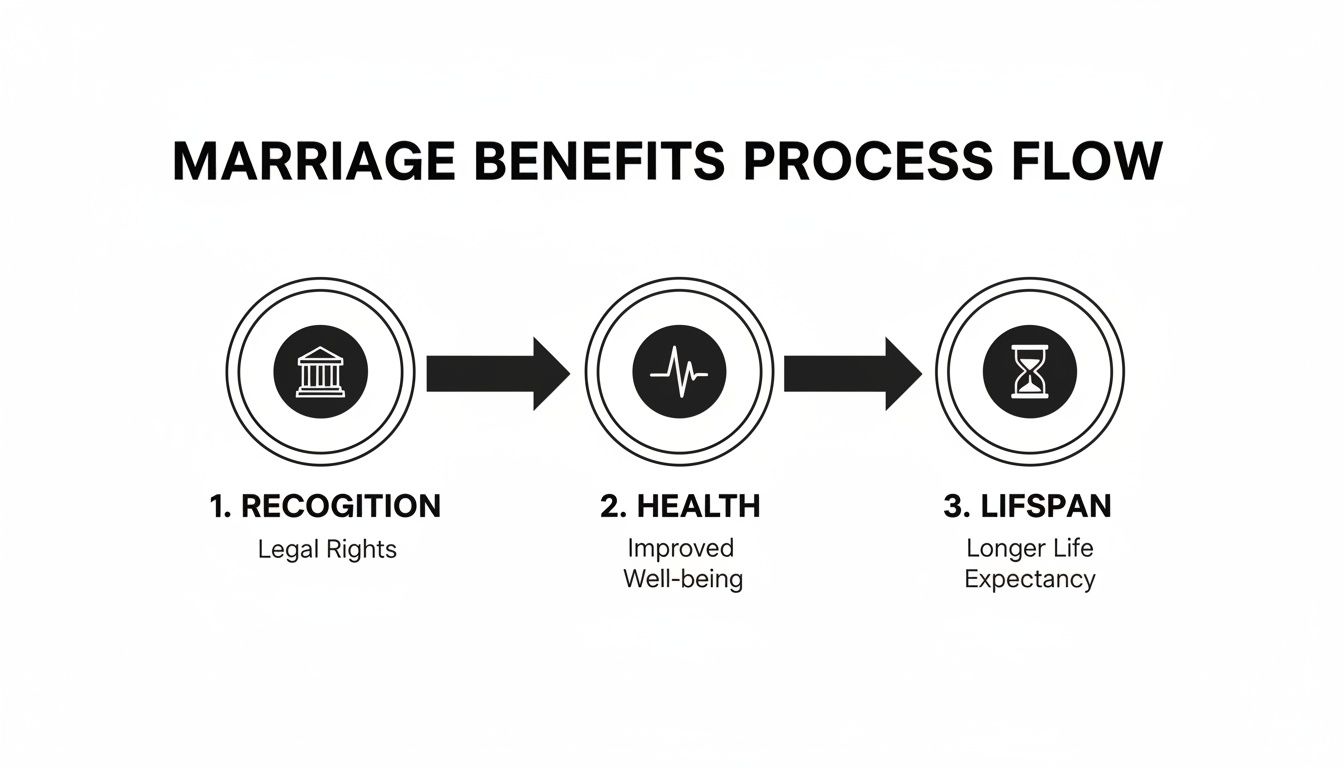
As you can see, the legal recognition that comes from marriage directly contributes to a healthier, more secure, and longer life together.
To make this all a bit more manageable, we’ve put together a simple checklist to guide you through the essential updates.
Essential Post-Marriage Update Checklist
| Task Category | Specific Action Item | Why It’s Important |
|---|---|---|
| Official Documents | Order 3-5 certified copies of your marriage certificate. | This is your golden ticket. You’ll need it for almost every other update. |
| Identity & Travel | Update your Social Security card first, then your driver’s license/state ID, then your passport. | This specific order prevents administrative logjams and ensures your legal identity is consistent everywhere. |
| Employment | Notify HR to update your name, tax withholding (W-4), and add your spouse to your health insurance. | You have a limited time (30-60 days) for insurance changes after a qualifying life event like marriage. |
| Finances | Update your name on bank accounts, credit cards, and loans. Consider opening a joint account. | Ensures all financial records are accurate and helps you start managing your finances as a team. |
| Legal & Estate | Update your will, power of attorney, and emergency contacts to include your spouse. | Protects your spouse and ensures your wishes are legally documented in case of an emergency. |
Working through these steps systematically will ensure your new life together starts on a solid, legally sound foundation.
Common Questions About Legal Marriage Changes
Once you say “I do,” a lot of things change—and not just your relationship status on social media. The legal side of things can feel a bit overwhelming, especially if you’re getting married online and wondering how it all works. Let’s clear up some of the most common questions so you can step into your new life with total confidence.
Is an Online Marriage Actually Legal Everywhere?
Yes, it absolutely is. When you get married online through a U.S. jurisdiction, that marriage is legally valid in all 50 states and is recognized internationally. This isn’t some loophole; it’s backed by the “Full Faith and Credit Clause” of the U.S. Constitution, which basically says that a marriage certificate from one state has to be honored by all the others.
This is exactly why getting married online is such a game-changer. It gives you a universally accepted legal status that works for everything from filing joint taxes to spousal immigration, no matter where you call home.
How Quickly Do the Legal Perks Kick In?
Instantly. The legal benefits of marriage start the very moment your marriage is officially registered and the certificate is issued. There is no waiting period.
From day one, you’re legally considered next-of-kin. That means you immediately have the right to make medical decisions for your spouse if they can’t, and you gain spousal inheritance rights. Financial perks, like being able to add your partner to your health insurance plan, also become available right away.
Do These Changes Apply to Same-Sex Couples?
Of course. Since the landmark 2015 Supreme Court ruling in Obergefell v. Hodges, legal marriage is a right for every couple. All the changes we talk about—from tax breaks and medical rights to property rules and immigration sponsorship—apply equally to same-sex married couples.
An online marriage provides the exact same legal foundation and protections for same-sex partners as it does for heterosexual partners. It’s all about equal access to all the rights and responsibilities that come with being legally married.
Do We Really Need a Prenup?
A prenuptial agreement (or “prenup”) isn’t legally required, but it’s a smart, practical tool for many couples. Think of it as a roadmap for your finances—a legal document that spells out how your assets and debts would be handled if you were to ever part ways.
A prenup can be especially helpful if one or both of you are coming into the marriage with significant assets, a business, or even a lot of debt. It just provides clarity and protects both of you, making sure you start your married life on the same financial page.
Ultimately, it’s a personal decision that starts with an open conversation. It’s about figuring out what level of financial planning will give you both the most peace of mind. Getting your legal documents in order is a key part of the whole process. If you’re just starting out, have a look at our guide on what you need for a marriage license to get the ball rolling.
Ready to make your union official without the hassle? With Marryfromhome.com, you can get legally married online from anywhere in the world. It’s simple, secure, and fully recognized. https://marryforhome.com


